Most flat roof leaks start small. A seam lifts. A drain fills with leaves. A crack opens around a vent pipe. Nobody sees it from the parking lot, and the first sign inside may be a stained ceiling tile.
Long winters, heavy snow, ice around drains, and hard spring rain all put extra stress on flat roofs. Good roof maintenance in Wisconsin Rapids, WI, helps catch weak spots before water reaches the insulation. If you manage buildings in both areas, see our guide to roof maintenance in Tomah, WI. Have a question about your roof? Call Golden Eagle Roofing at 608-633-6719.
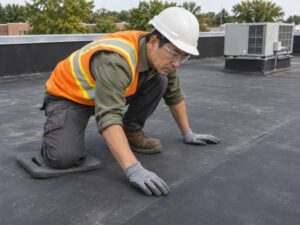
What Does a Roof Maintenance Visit Check?
EPDM is a rubber membrane, often black. TPO is commonly white or light gray and has seams joined with hot air. Both are single-ply roofing systems. Sun, wind, snow, and ice can wear down roof details. So can dropped tools and repeated foot traffic near rooftop equipment.
A maintenance visit can include checks for:
- Open or lifting seams
- Loose or cracked flashing
- Cuts, holes, and punctures
- Dried or split sealant
- Clogged drains and scuppers
- Spots where water remains after rain
A lifted seam caught early may only need a localized repair. If water gets underneath it, the work can extend to wet insulation. Leave rooftop checks to trained personnel with appropriate fall protection, and defer routine access when snow or ice makes the roof unsafe.
EPDM vs. TPO: How Their Care Differs
| What to compare | EPDM | TPO |
|---|---|---|
| Appearance | Often black rubber | Often white or light gray |
| How seams are joined | Compatible seam tape or adhesive | Heat-welded with hot air |
| Areas to check | Splice edges, old patches, and membrane pulling away from walls or curbs | Welded seams, T-joints, and areas near rooftop equipment |
| Cleaning | Follow the membrane manufacturer’s cleaning instructions | Use a cleaner and method approved for the TPO membrane |
| Typical patch repair | Prepare the surface and use compatible primer, tape, or patch materials as specified | Prepare a clean, dry surface and heat-weld a compatible patch where appropriate |
| What to avoid | Oils, grease, and unapproved solvents | Welding on a wet, dirty, or contaminated surface |
What Should You Check on an EPDM Roof?
On EPDM, pay close attention to seams, old patches, and places where the rubber meets another part of the roof.
Check Splice Edges for Lifting and Dirt Lines
EPDM sheets are joined at splices with seam tape or adhesive. Look for lifted edges, gaps, or dirt lines at the overlap. A dirt line is a clue to look closer; it doesn’t prove water has reached the insulation.
Inspect Old Patches
Revisit past repairs as part of routine maintenance. Curled corners, gaps, and bubbles are signs that a patch may need further attention.
Clean, Prime, Then Patch
Many EPDM patches require cleaning, a compatible primer, and a patch or cover tape approved for the system. Follow the membrane manufacturer’s repair method. General-purpose sealants may not bond well and can make a later repair harder.
Check Where Rubber Pulls Away From Walls and Curbs
As EPDM ages, it can pull tight at walls, curbs, and corners. Look for stretched membrane or gaps where the sheet has pulled away. The cause of the movement matters when deciding how to repair it.
How Should You Maintain a TPO Roof?
Pay particular attention to welded seams, sheet intersections, and the paths technicians use to reach equipment.
Check Welded Seams
TPO seams are joined with hot air. A trained roofer can probe suspect welds where appropriate to find gaps or unbonded edges. The condition of the membrane determines whether the area should be rewelded or repaired with a compatible patch.
Check the T-Joints
A T-joint is where three sheets meet. The change in thickness makes it worth a close look. Check for gaps, lifted edges, and damaged cover patches where the system uses them.
Weld Repairs on a Clean, Dry Surface
Dirt, moisture, and old residue can interfere with a weld. Follow the manufacturer’s preparation and repair instructions, especially on weathered membrane. If you need flat roof repair in Stevens Point, WI, ask how the roofer will prepare and check the patch for your particular membrane.
Surface Cleaning and Walkway Areas
Use a cleaning method the membrane manufacturer approves. Look for cuts and punctures near ladders, HVAC units, and other service areas. If damage keeps appearing along the same route, consider approved walkway pads or a better route for equipment access.
How Do You Keep Roof Drains Working?
Even a flat roof needs a clear path for water to leave. Check the drains, scuppers, and the areas that carry water toward them.

Clear the Drains
Spring and fall are good times to have drains and strainers checked and cleared. Dirt rings or water marks can show where water backed up. If a drain repeatedly clogs after leaves fall, add a check once most leaves are down.
Watch for Ponding
Substantial water still on the roof about 48 hours after rain is a reason to investigate. Note the location and approximate size. If the same spot keeps holding water even when the outlet is clear, have a roofer check the slope and drainage layout. Follow the requirements for your roof system.
Winter and Ice Around Drains
Ice can block drains even after debris has been cleared. During thaws, report visible drainage problems or new interior stains, and have the drains and surrounding roof checked when conditions allow.
Where Does Flashing Fail on a Flat Roof?
Flashing seals transitions where the roof meets a wall, pipe, curb, or edge. Check these areas for:
- Pipe boots: Cracks, splits, or loose clamps around vent pipes.
- Curbs: Gaps or tears around HVAC units and skylights.
- Parapet walls: Wrinkles, gaps, or flashing pulling away from the wall.
- Termination edges: Loose bars or metal edges that secure the membrane.
- Pitch pockets: Cracked or shrunken filler around irregular pipes and supports.
Small gaps may be suitable for resealing. Loose or torn flashing may need to be secured again or replaced. The right fix depends on the material and condition of the joint.
How Can a Custom Maintenance Plan Help?
If a back drain clogs every fall, add a check after the leaves drop. If a seam was repaired in April, make it a priority at the next visit. If punctures keep showing up near one HVAC unit, review how technicians reach it and whether that route needs protection.
A custom roof maintenance plan accounts for the building’s use, drainage, and repair history. A custom plan for TPO focuses on welds and T-joints, while an EPDM plan pays closer attention to splice edges and old patches. Both should identify what needs prompt attention and what to recheck later.
What Should a Roof Maintenance Report Include?
Confirm what documentation is included when you set up maintenance. A useful record can include:
- The visit date and who did the work
- A roof map or location notes and a repair ID for each issue
- Notes on the membrane, seams, flashing, drains, and edges
- Before-and-after photos when available
- Completed repairs and the materials used
- Open items ranked by urgency and a suggested follow-up
| Date | Repair ID | Roof location | Finding | Repair | Next check |
|---|---|---|---|---|---|
| April 14 | R-07 | Section B, north drain | 6-inch lifted seam near drain | Cleaned, primed, and repaired with compatible EPDM cover tape | After the next heavy rain, when conditions allow |
Keep these records together so you can see whether a drain clogs every fall or a past repair is still holding.
When Should You Schedule Roof Maintenance in Wisconsin Rapids?
Spring and fall are good starting points, with additional checks after severe weather or work that may have damaged the roof. Follow any schedule required by the roof manufacturer or warranty.
| When | What to do |
|---|---|
| Spring, after snow melts | Arrange an inspection, clear drainage outlets, and check for winter damage. |
| Fall, before freezing weather | Clear leaves and address vulnerable seams and flashing. |
| After a major storm | Arrange a check for punctures, loose edges, and debris when conditions allow. |
| About 48 hours after rain | If substantial water remains, note where it collects and have drainage checked. |
| After a repair | Agree on when to recheck the area based on the repair and the next significant rain. |
| After HVAC work | Have the area checked for cuts, loose screws, and dropped tools. |
| When an urgent issue appears | Call promptly about active leaks, open seams, or torn flashing. |
If you see an interior leak, loose flashing, or water that won’t drain, arrange a commercial roof inspection.
Book Roof Maintenance in Wisconsin Rapids With Golden Eagle Roofing
Start with a schedule for checking drains, seams, and flashing. Keep a record of repairs and items to revisit. Golden Eagle Roofing offers commercial roof maintenance. Call 608-633-6719 or contact us online to discuss maintenance for your Wisconsin Rapids property.
Frequently Asked Questions
Is one inspection a year enough for a flat roof in Wisconsin Rapids?
Spring and fall inspections are a good starting point. Past leaks, frequent rooftop traffic, or major storms can call for extra checks. Follow any schedule specified in your warranty.
What’s the difference between EPDM and TPO roof maintenance?
EPDM care focuses on splice edges, old patches, and rubber pulling away from walls. TPO care focuses on welded seams, T-joints, and areas around rooftop equipment. Both need clear drains and sound flashing.
What causes leaks on EPDM and TPO roofs?
Open seams, punctures, and loose flashing can let water in. Blocked drains can make the problem worse by allowing water to back up. A ceiling stain may be some distance from where the water entered, so trace the water path before deciding what to repair.
What should I do if water is standing on my flat roof?
If substantial water remains about 48 hours after rain, have a roofer check the drains and slope. Note where it collects and whether it happens repeatedly. Check your roof system’s drainage requirements.
Why do roofers take photos during a maintenance visit?
Dated photos help document the roof’s condition and show whether an issue has changed. They can also be useful if a manufacturer or insurer asks for maintenance or damage records.
Can regular roof maintenance delay roof replacement?
It can. Clearing drains and addressing small defects early can help protect the roof and the layers below. A roof with widespread deterioration or recurring leaks may still need a larger repair or replacement.