Every roof inspection report should answer three simple questions. What was found? How serious is it? What should you do next?
If a report can’t answer those clearly, it isn’t much help to a building owner. Those questions provide a useful framework for commercial roof inspections in Wisconsin Rapids, WI. They also apply to owners farther west researching Commercial Roof Inspections in Onalaska, WI.
Below, we’ll show you how an inspection generally works, step by step. You’ll also learn the difference between what an inspector can observe and what needs separate testing to confirm.
Step 1: Start on the Ground
A good inspection begins before anyone climbs a ladder. First, the inspector should review the building’s roof history with you. Useful questions include:
- How old is the roof?
- Have you had leaks? Where, and when?
- Has the roof been repaired before?
- Is there a warranty still active?
A ground-level review can include gutters, downspouts, wall stains, and visible roof edges. Sometimes the first clue is below the roof, such as a damaged downspout or loose roofing granules.
Step 2: Check the Roof Zone by Zone
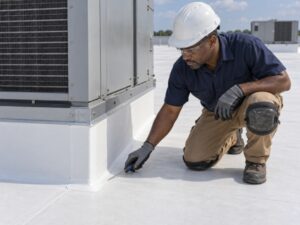
A systematic inspection divides accessible roof areas into zones. This helps organize observations and identify areas that could not be inspected safely.
- The open field: The main roof surface is checked for visible damage, wear, and signs of possible underlying problems.
- The perimeter: Edges, corners, and parapets need attention, including edge metal, coping, and wall flashing.
- Penetrations: Pipes, vents, skylights, and HVAC curbs need sound flashing and seals.
- Drainage: Drains, scuppers, gutters, and the paths leading to them are checked for visible obstruction, damage, and signs of ponding.
The report should identify limits such as snow cover, debris, concealed details, unsafe surfaces, or unavailable interior access.
What “Observable Defects” Look Like on Different Roofs
An observable defect is a condition that can be identified within the agreed inspection scope without opening the roof. Findings depend on the roof type:
- EPDM: Shrinkage or stress at edges, lifting seam materials, and punctures.
- TPO or PVC: Open seams, damaged flashing, punctures, and surface deterioration. Dirt alone does not establish membrane failure.
- Built-up or modified bitumen: Blisters, cracked surfacing, open laps, and loss of protective gravel or granules.
- Metal roofs: Corrosion, loose or backed-out fasteners, and separation at panel laps or flashing.
On all roof types, persistent ponding deserves attention. Water remaining about 48 hours after rain or snowmelt warrants a drainage assessment. Snowdrifts and blocked outlets can also affect where meltwater collects during Wisconsin winters.
Step 3: Photograph and Write Up the Findings
A list of problems without locations or supporting detail is hard to use. A useful inspection report should explain:
- Where the condition is: A roof sketch, section label, or recognizable reference point helps locate it.
- What it looks like: Photos can show both the overall location and a close-up.
- What was observed: Plain wording, such as “seam open about 6 inches near the north drain,” is more useful than a vague description.
- How urgent it is: Priorities can distinguish immediate concerns, planned repairs, and conditions to monitor.
This helps owners plan budgets and address urgent items first. Confirm which photos, diagrams, written findings, and recommendations are included in the agreed service.
Owners with multiple properties can benefit from consistent records. The same reporting principles apply to Commercial Roof Inspections in Stevens Point, WI, making findings easier to compare across buildings.

“We Saw It” vs. “We Tested It”
This is an important distinction in an inspection report.
A visual inspection can show signs of trouble, but it cannot always confirm what is happening beneath the surface. Wet insulation, for example, can remain hidden beneath a membrane that looks sound.
A clear report separates observed conditions from suspected problems and explains when additional testing is needed. Common investigations beyond a standard visual inspection include:
| Test | What It Can Help Identify | What It Needs |
|---|---|---|
| Infrared scan | Thermal patterns that may indicate moisture; findings need verification | Suitable roof construction, weather, timing, equipment, and interpretation |
| Moisture survey | Areas with readings suggesting elevated moisture | Equipment suitable for the assembly, a survey plan, and confirmation of suspect areas |
| Core cut | Roof layers and material condition at the sampled location | Authorization, a planned sample location, and a compatible watertight repair |
| Leak detection | Potential water-entry locations or membrane breaches | A suitable electronic or controlled water-testing method and appropriate access |
| Structural review | Structural concerns involving decking, framing, or load capacity | A qualified structural professional, with access and investigation as needed |
Additional testing should answer a defined question. Recurring leaks, planned replacement, purchase due diligence, or warranty requirements may justify investigation even when little damage is visible. A visually sound surface does not prove that all underlying materials are dry.
Good Times to Schedule an Inspection
- After snow melts in spring, to assess winter damage
- In early fall, before freezing weather
- After a significant hail or windstorm, once conditions are safe
- Before buying or leasing a building
- Before a roof warranty expires, allowing time to review and report concerns under its terms
Book Your Inspection With Golden Eagle Roofing
You shouldn’t have to guess what is happening above your ceiling. Contact Golden Eagle Roofing to discuss commercial roof inspections in Wisconsin Rapids, WI.
Before the visit, establish the inspection scope, access arrangements, documentation, and any separate testing. Call (608) 633-6719 to discuss your property and request an inspection.
Frequently Asked Questions
1. What’s the difference between a roof inspection and a roof estimate?
An estimate proposes a price and scope for work. An inspection assesses roof condition within an agreed scope. Inspection findings can help establish what work is needed before an estimate is prepared, though the two services may overlap.
2. Can you inspect my roof in winter?
Winter inspections may be possible when access and conditions are safe. Snow and ice can conceal seams, drains, and damaged areas. Any report should state those limits, and a follow-up after snowmelt may be needed.
3. Why does ponding water matter if the roof isn’t leaking?
Persistent ponding adds weight and can contribute to roof deterioration. It may indicate blocked drainage, low spots, or other problems. Even without an interior leak, the cause deserves assessment.
4. Is an infrared scan part of every inspection?
No. Infrared scanning requires suitable equipment, roof conditions, weather, and interpretation. It is a separate investigation unless specifically included in the agreed scope. It can help identify suspect moisture areas, but findings may need confirmation through other methods.
5. Will a core cut damage my roof?
A core cut intentionally opens a small area of the roof to inspect or sample its layers. It requires authorization and a compatible repair to restore waterproofing. Sampling should be planned with the roof system and any warranty requirements in mind.
6. What should I do with my inspection report?
Keep it with your roof records and use it to plan repairs and budgets. It can also support insurance documentation, warranty records, and property transactions, though it does not guarantee coverage or approval. Comparing reports over time helps track changes in roof condition.