
There are some things most roofing ads won’t tell you. Two buildings can have the same EPDM rubber on top, and one roof can last decades while the other leaks within a few years. The rubber alone doesn’t explain the difference. Installation and maintenance matter.
EPDM roofing in Wisconsin Rapids, WI has to handle a tough environment for flat roofs. Older commercial buildings can carry decades of vents, pipes, and patch jobs. Then winter piles snow on top, and spring brings snowmelt. A rubber roof needs sound seams, flashing, attachment, and drainage to handle those conditions.
This guide walks through those details one at a time. The same considerations apply to owners looking at EPDM roofing in Stevens Point, WI, but each building is different. Here, we’ll focus on what matters for properties along the Wisconsin River.
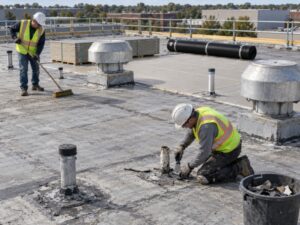
What Is EPDM Roofing?
EPDM is a single-ply rubber sheet used on flat and low-slope roofs. It comes in large rolls, usually black, which can reduce the number of field seams. It’s common on shops, warehouses, churches, schools, and flat sections of homes.
Material Claims vs. Installation Details: Why It Matters
When people talk about EPDM, they often list the good parts of the material:
- It stays flexible in the deep cold.
- It handles the sun and weather well.
- It can last a long time.
Those are fair things to say about the rubber. But none of them stop a leak at a badly sealed seam or a poorly installed pipe boot. Seams, flashing, and roof edges are important places to investigate when an EPDM roof leaks.
So when you read a quote, look past the material. Ask how the five parts below will be handled. If a quote doesn’t say, ask.
1. The Membrane: Which Sheet Are You Getting?
| Choice | What It Means | Selection Considerations |
|---|---|---|
| 45 mil | Thinner sheet | An option where the approved assembly and project requirements allow |
| 60 mil | Thicker sheet | A common option when additional membrane thickness is desired |
| Reinforced | Has a fabric layer inside | Often specified for mechanically attached systems; follow the approved assembly |
| Non-reinforced | Rubber without internal fabric reinforcement | Used in approved adhered or ballasted systems, depending on the product |
A 60-mil sheet offers more membrane thickness than a 45-mil sheet, but thickness is only part of the decision. Service traffic, substrate support, walkway protection, attachment, and warranty requirements also matter. No membrane should be treated as protection against careless snow removal or sharp tools.
2. Seams: The Most Important Few Inches
A seam is where two sheets overlap. Many modern EPDM systems use primer and seam tape. Installation generally involves:
- Preparing the overlap with the manufacturer’s approved cleaning method.
- Applying primer and allowing it to reach the specified condition before joining the sheets.
- Installing the seam tape and rolling the seam as instructed, without wrinkles or gaps.
- Installing required edge treatments, intersection patches, and other accessories for the selected system.
Joining the sheets before the primer is ready can weaken the bond. A seam may look fine at first and separate later. Cold weather can affect material handling and drying time, so seam work must follow the product’s application requirements.
3. Attachment: How the Roof Stays Down
| Method | How It Works | Good to Know |
|---|---|---|
| Fully adhered | Sheet is bonded to an approved substrate | Adhesive, substrate, and application conditions must meet system requirements |
| Mechanically attached | Plates and fasteners secure the membrane in the specified pattern | Deck suitability, fastener resistance, and spacing affect performance |
| Ballasted | Sheet lies loose beneath specified stone or pavers | The structure must support ballast and other required loads, including snow |
The right choice depends on the roof deck, building height, wind exposure, and the approved roof assembly. These considerations also apply to EPDM roofing in Onalaska, WI, near the Mississippi River. Neither a river location nor a preference for one attachment method replaces a project-specific assessment.
4. Penetrations: Every Pipe Is a Possible Leak
A penetration is anything that passes through the roof, like a vent pipe, exhaust fan, or heating unit. Older buildings can have many of these, including some that are no longer used.
Common detailing methods include:
- Compatible pre-made boots for round pipes, sealed and secured according to the system details.
- Approved formable EPDM flashing for irregular shapes.
- Flashing up rooftop curbs to the height required by the selected system and applicable requirements.
- Removal of unused penetrations when their function has been confirmed and removal is included in the work scope, followed by proper deck and roof repairs.
Pitch pans, or sealant pockets, are another option for certain penetrations. Their filler can deteriorate and needs maintenance. Where practical, a suitable boot or curb detail can reduce reliance on exposed sealant.
5. Drainage: Where Does the Water Go?
A flat roof still needs a drainage plan. Tapered insulation can help create slope toward drains, while crickets can steer water around rooftop units. The required slope depends on the roof design and applicable requirements.
Water then leaves through interior drains, scuppers, or gutters. Those outlets need to be positioned and maintained so water can reach them and leave the roof.
Water remaining about 48 hours after rain deserves a closer look. Blocked drains, low spots, or other drainage problems may be involved. In winter, ice can obstruct outlets, so the drainage assessment should account for melting snow as well as rain.
What Should Be on Your EPDM Quote?
A good quote for EPDM roofing in Wisconsin Rapids, WI should list:
- Sheet thickness and whether it’s reinforced
- How the roof will be held down
- How seams will be made
- How pipes, vents, and rooftop units will be flashed
- The drainage plan, including any tapered boards or crickets
Contact Golden Eagle Roofing at (608) 633-6719 to discuss your roof and request an assessment. Ask for the proposed materials, work scope, and any included photo documentation in writing.
Frequently Asked Questions
1. How long does an EPDM roof last in Wisconsin Rapids?
With proper installation and maintenance, many EPDM roofs last 20 to 30 years or more. Membrane condition, seams, flashing, drainage, weather exposure, and upkeep all affect service life.
2. Can EPDM be installed in cold weather?
Yes, when conditions meet the selected system’s requirements. Adhesives, primers, and tapes have product-specific handling and application limits. Some work may need to wait for suitable weather.
3. Is 60 mil EPDM worth the extra cost?
It can be. A 60-mil sheet provides more membrane thickness than a 45-mil sheet, but the best choice depends on the full assembly, expected traffic, warranty requirements, and budget. Walkway protection and careful maintenance remain important.
4. Can a new EPDM roof go over my old roof?
Sometimes. Suitability depends on existing roof layers, moisture, deck condition, structural capacity, compatibility, and applicable requirements. A roof assessment may include a moisture survey and core samples. Wet or damaged materials need to be addressed before they are covered.
5. Why do EPDM roofs leak?
Leaks can develop at seams, pipe boots, roof edges, punctures, or other damaged details. Material selection matters, but correct installation and ongoing maintenance are essential to keeping the full roof system watertight.
6. How do I know if my flat roof drains well?
If water remains about 48 hours after rain, arrange a drainage assessment. Owners should use observations from safe locations and leave rooftop checks to trained professionals.