TPO roofs are tough, but they are not perfect. After Wisconsin winters, even a well-built flat roof can develop defects. Many localized TPO problems can be repaired when the surrounding materials remain sound. Commercial roof inspections in Stevens Point, WI can help identify open seams, damaged flashing, and other visible issues before they cause more extensive damage. Have a leak right now? Call Golden Eagle Roofing at 608-633-6719 to discuss your roof and current availability.
Below, we walk through common problems that call for TPO roof repair in Stevens Point, WI, and the methods used to address them.
Why TPO Roofs Run Into Trouble in Stevens Point
TPO is a single-ply roofing membrane, commonly supplied in white. Overlapping sheets are joined with hot-air welded seams. Our article, TPO Roofing Offers Superior Weather Protection, discusses the material’s benefits. Its performance still depends on correct installation, flashing, attachment, drainage, and maintenance.
Wisconsin weather tests those details. Snow can remain on roofs, melt during warmer periods, and freeze again as temperatures fall. Summer adds hail, wind, and heavy rain.
These conditions affect flat-roof buildings around Stevens Point, Plover, and nearby Portage County communities, including warehouses, schools, offices, churches, and retail stores.
Common TPO Roof Problems and How to Fix Them
Open or Lifting Seams
The problem: A seam can open because of an incomplete original weld, movement, or deterioration. Water can then enter beneath the membrane. Splits near seams also need assessment rather than simply rewelding the visible opening.
The fix: The surface is cleaned and prepared according to the membrane manufacturer’s requirements. A suitable seam may be rewelded. If the material is damaged or cannot form a sound weld, a compatible TPO cover strip or a larger repair may be needed.
Punctures and Tears
The problem: Foot traffic, dropped tools, HVAC service work, hail, and fallen branches can damage the membrane. Some punctures are difficult to see without a close inspection.
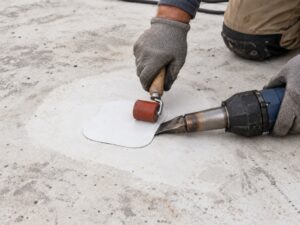
The fix: The area is cleaned and prepared. A compatible TPO patch with rounded corners extends beyond the damage by the manufacturer’s required amount and is heat-welded in place. Any underlying moisture damage must also be addressed.
Cracked or Loose Flashing
The problem: Flashing seals the roof around pipes, vents, walls, and rooftop units. Damaged boots, loose terminations, and open corners can allow leaks.
The fix: Repairs may include replacing damaged boots, correcting loose attachments, and installing compatible TPO flashing or corner pieces. The detail needs to address the cause of the failure and follow the roof system’s requirements.
Membrane Pulling at Edges and Curbs
The problem: Membrane can pull tight at edges, corners, and curbs because of movement, inadequate securement, or installation issues. This stress can damage seams and flashing.
The fix: The cause must be evaluated before repair. Work may involve correcting securement, replacing stressed membrane or flashing, and installing a manufacturer-approved detail that accommodates movement.
Ponding Water and Clogged Drains
The problem: Persistent standing water can indicate blocked drainage, inadequate slope, or a structural issue. Water remaining roughly 48 hours after rain is a common reason to investigate, but the roof design and system requirements also matter.
The fix: Drains, scuppers, gutters, and downspouts should be checked for blockages. Low areas may require tapered insulation, drainage changes, or other corrective work. Ice removal and changes to drainage should be handled by qualified professionals using methods that protect the roof.
Worn, Chalky, or Brittle Membrane
The problem: Surface chalking may occur as TPO weathers, but chalking alone does not establish that the roof has failed. Cracking, brittleness, and the membrane’s ability to accept a reliable weld need closer assessment.
The fix: Localized damage may be repaired after manufacturer-approved preparation and verification that the existing membrane can be welded. Widespread cracking or loss of weldability may make broader restoration or replacement more appropriate.
Repairs That Last vs. Quick Fixes
A durable TPO repair uses materials and methods approved for the existing roof system. Compatible TPO patches are commonly heat-welded to properly prepared membrane.
Avoid improvised repairs such as:
- Tar or asphalt roof cement: These products may be incompatible with TPO and complicate later repairs.
- Unapproved silicone caulk: Residue can interfere with preparation and future welding.
- Duct tape or non-roofing tape: These products are not designed to provide a lasting roof repair.
A manufacturer-approved temporary repair may be appropriate in some conditions, but it needs a plan for permanent work.
When a Spot Repair Is Not Enough
A localized repair works best when the damage is limited and the surrounding roof remains sound. Broader work may be needed when:
- Insulation is wet: A surface patch alone leaves the moisture problem unresolved. Affected materials need assessment and replacement where required.
- Seams are failing across the roof: Repeated failures can point to a wider installation or material problem.
- Leaks keep returning: The source may have been missed, or drainage, movement, or another underlying condition may remain unresolved.
- The membrane is widely cracked or brittle: It may no longer support reliable localized welded repairs.
If the roof is past the patching stage, replacement or a broader restoration approach may be appropriate. Commercial roof coatings are an option only when the existing assembly qualifies, moisture is addressed, and compatibility and adhesion are confirmed. The recommendation should explain why the proposed approach suits the roof’s condition.
How Finished Repairs Should Be Checked
A repair needs verification appropriate to the roof system and work completed. Closeout checks should include:
- Probing cooled welds according to the manufacturer’s procedure to identify openings or incomplete bonds
- Inspecting patches for the required weld width, sound detailing, and any visible damage
- Considering controlled water testing when appropriate, with precautions to prevent additional interior damage
- Checking nearby drainage routes for blockages or conditions affecting the repair
- Documenting the findings and completed work with photos and written notes
A visible bead of melted material alone does not prove that a weld is sound. Any follow-up inspection should be agreed on with the contractor.

Get Your TPO Roof Fixed Before Winter Hits
A small seam opening or damaged boot may be suitable for a localized repair. Left unresolved, it can allow water into insulation, damage stock, and lead to a larger project.
For TPO roof repair in Stevens Point, WI, call Golden Eagle Roofing at 608-633-6719 or contact the team online to discuss your roof, available services, and assessment options.
Frequently Asked Questions
What Is the Most Common TPO Roof Problem?
Open seams, punctures, and damaged flashing are common issues. Their causes can include incomplete welding, movement, service traffic, and aging. An inspection helps determine which defects are present and what caused them.
Can I Fix a TPO Roof Leak Myself?
Leave roof access and repairs to trained professionals. A durable welded repair requires suitable equipment, compatible materials, proper preparation, and verification. Improvised caulk or tar repairs can complicate later work.
How Much Does TPO Roof Repair Cost?
Cost depends on the damage, access, roof condition, and whether insulation or decking needs replacement. A localized patch generally involves less work than repairing a widespread failure. Request an assessment and a written scope to understand the proposed cost.
Can TPO Roofs Be Repaired in Cold Weather?
Some repairs can be completed in cold weather when safe conditions and the product requirements allow. The weld area must be clean, dry, and free of snow and ice. Equipment settings, material handling, and test welds need to follow the manufacturer’s guidance. A temporary measure may be needed until permanent repair conditions are suitable.
How Long Does a TPO Repair Last?
A properly prepared and welded repair can provide durable service. Its lifespan depends on the surrounding membrane, installation quality, drainage, weather exposure, and maintenance. A patch does not renew the condition of an aging roof around it.
How Can I Prevent TPO Roof Problems?
Arrange inspections after winter and before the next winter season, with additional checks after significant hail or windstorms. Keep drainage clear, limit unnecessary roof traffic, and use compatible walkway protection along equipment service routes. Follow the roof manufacturer’s maintenance and warranty requirements.