If you own a building in Eau Claire, you know the roof works hard all year. It carries snow in winter, sheds snowmelt in spring, and heats up in the summer sun. A flat roof that can’t keep up can cost you in leaks, repairs, and lost time. PVC roofing in Eau Claire, WI is one option for protecting a suitable flat or low-slope building.
PVC is a tough, flexible sheet used on flat and low-slope roofs. In this guide, we’ll show you what keeps it watertight and how to care for it through each Wisconsin season. If your building has a metal roof instead, our guide on metal roof restoration in Eau Claire, WI discusses that option. To talk with Golden Eagle Roofing, call (608) 633-6719.
What Is a PVC Roof?
PVC stands for polyvinyl chloride. It is a “single-ply” roofing membrane, meaning the waterproofing layer consists of a single membrane rather than multiple built-up plies. The roof assembly can also include insulation, a cover board, and other components.
The sheets come in large rolls and are joined with hot-air welded seams. Many PVC roofs are white. You see them on offices, stores, schools, restaurants, and warehouses.
Some PVC membranes offer resistance to certain oils, fats, and chemicals, which can make them suitable for restaurants with rooftop kitchen exhaust. Compatibility with the actual exposure must be checked against the selected product’s requirements.
Eau Claire Weather and Your Roof
Snow, ice, rain, and seasonal temperature changes all affect roofs in Eau Claire. Snow can accumulate unevenly, ice can obstruct drainage, and spring snowmelt can expose weak seams or flashing.
These conditions show why the small details matter. A good material is only part of the story. How the roof is joined, attached, flashed, and drained determines how the system performs.
Seams: The Heart of a PVC Roof
Seams are where two sheets meet. On a PVC roof, a hot-air welder heats the overlapping surfaces so they fuse together. These field seams rely on a welded bond rather than adhesive or seam tape.
A good weld needs clean, dry surfaces and suitable equipment settings. After the weld has cooled, seams should be checked with a seam probe according to the manufacturer’s instructions. Test welds and other required checks help confirm the welding process is producing a sound bond.
Incomplete welds can allow water entry, so seam preparation and verification deserve close attention.
How a PVC Roof Is Held Down
A PVC membrane needs an attachment system designed for the building. The method depends on the roof deck, building conditions, and the manufacturer-approved assembly. Common options include:
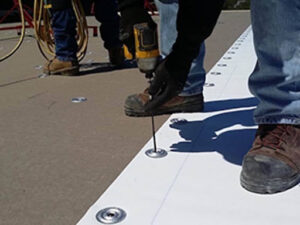
- Mechanically attached: Fasteners and plates secure the membrane to a suitable deck, often within the seam laps. The overlapping sheet covers the fasteners and is welded in place. Fasteners must be appropriate for the deck and specified assembly.
- Fully adhered: The membrane is bonded to an approved insulation or cover-board surface. The layers beneath it must also be securely attached. Preparation and application conditions must meet the adhesive and membrane requirements.
- Ballasted: Some approved systems use stone or pavers to hold the membrane in place. Suitability depends on structural capacity, wind design, drainage, and the manufacturer’s requirements.
Why Wind and Snow Load Matter
Wind uplift is often greatest at roof corners and edges. These areas may need different attachment patterns from the roof’s open field. Snow adds a separate structural load, and drifts can accumulate beside walls, parapets, and rooftop equipment.
There is no single right attachment method for every roof. The plan should account for building height, deck type, wind exposure, applicable requirements, and the approved roof assembly. The proposal should explain the selected method and why it fits the building.
The membrane itself does not establish the roof’s snow-load capacity. A qualified structural professional should evaluate capacity when there are concerns about the structure or expected loads.
Flashings: Where Leaks Like to Hide
Flashings seal the spots where the roof meets something else. Think walls, HVAC units, vents, pipes, drains, and roof edges. These details are common leak locations.
PVC-compatible flashing materials can be heat-welded to the field membrane. Prefabricated boots and corners help form certain details, while terminations, clamps, sealants, and edge components must follow the selected system’s requirements.
When PVC Meets a Metal Roof
Some buildings mix roof types. A shop might have a flat main roof with a sloped canopy or addition. Those sloped sections may use metal panels while PVC covers the low-slope section.
Owners considering a Pro Rib metal roof in Eau Claire, WI should pay close attention to the transition between systems. The flashing needs to direct water correctly, accommodate movement, and remain compatible with both roof assemblies.
How PVC Handles Each Wisconsin Season
Winter
A suitable PVC system must meet the manufacturer’s requirements for the expected climate. Winter can still expose weak details, and ice can block drains or back up water. Leave roof access, drain clearing, and snow removal to trained professionals. Sharp tools can damage the membrane.
Spring
Melting snow and spring rain test seams, flashing, and drainage. Persistent standing water may indicate a blockage or low spot that needs assessment. Evaluate drainage against the roof design and applicable system requirements.
Summer
Reflective white PVC can reduce roof-surface temperatures in sunny weather. Energy savings depend on insulation, building use, HVAC systems, and climate. In Wisconsin, both summer cooling benefits and winter heating effects matter. Arrange an inspection after significant hail or windstorms.
Fall
Leaves and twigs can clog drains and scuppers. Fall is a useful time to clear drainage routes and repair defects before snow arrives.
A Simple PVC Roof Care Plan

- Schedule inspections in spring and fall, and after significant storms, following the roof system’s maintenance requirements.
- Keep drains, scuppers, gutters, and overflow drainage clear.
- Inspect seams, flashing, and edges during maintenance visits.
- Use compatible walkway protection along regular service routes near equipment.
- Have punctures and cuts repaired promptly with materials and methods approved for the existing membrane.
- Keep inspection and repair records, including any documentation required by the warranty.
How long a PVC roof lasts depends on the product, membrane thickness, installation, drainage, exposure, and maintenance. Regular checks help identify small defects before they cause more extensive damage.
Is PVC Better Than TPO or EPDM?
Each has strengths. PVC and TPO use hot-air welded seams, while EPDM systems generally use compatible adhesives or seam tapes. Certain PVC products offer useful resistance to grease and chemicals. Costs, compatibility, and performance vary by product and assembly. The best choice depends on the building, budget, and roof use.
Why Choose Golden Eagle Roofing
A PVC roofing proposal should explain the membrane, attachment method, seam checks, flashing details, drainage, and maintenance requirements. These details help Eau Claire building owners compare options and understand the work before it begins.
Call Golden Eagle Roofing at (608) 633-6719 to discuss your PVC roofing needs, available services, and the next step for your building.
Frequently Asked Questions
Is PVC Roofing a Good Choice for Flat Roofs in Eau Claire, WI?
PVC can be suitable for flat and low-slope roofs when the assembly is designed for the building and installed according to the manufacturer’s requirements. Welded seams, sound flashing, adequate drainage, and ongoing maintenance all affect performance.
How Are PVC Roof Seams Joined?
Overlapping PVC membrane surfaces are fused with hot air. After cooling, seams should be checked according to the manufacturer’s instructions to identify gaps or incomplete welds.
Can a PVC Roof Handle Heavy Wisconsin Snow?
Snow-load capacity depends on the building’s structure and roof design, not simply the membrane type. Heavy or uneven snow accumulation may need professional assessment. Keep people away from areas showing signs of structural distress and use qualified professionals for any necessary snow removal.
How Often Should My PVC Roof Be Inspected?
Spring and fall inspections are a common baseline, with additional checks after significant hail, wind, or other damage. Follow the roof manufacturer’s maintenance and warranty requirements, and arrange an assessment when leaks or other concerns appear.
How Long Does a PVC Roof Last?
There is no single lifespan for every roof. Performance depends on the membrane product, thickness, installation quality, drainage, weather exposure, and upkeep. Regular inspections and timely repairs help maintain the roof’s condition.