Winter in Baraboo is tough on a roof. Snow sits, melts, and freezes again. Temperature changes stress seams and flashing, and existing defects can let water in. Then one day, there is a brown spot on your ceiling.
A compatible roof coating system can add years to a roof that is still sound, provided underlying problems are repaired first. Want the basics first? See how to enhance your roof’s durability with rubber roof coating. But a coating only works when the roof qualifies and the application follows the selected system’s requirements. Here is what a good roof coating job in Baraboo, WI should look like from start to finish.
Which Roofs Can Be Coated?
Coatings can be suitable for flat, low-slope, and many metal roofs. You see these on shops, warehouses, churches, schools, farm buildings, and some homes.
Potential surfaces for compatible coating systems include:
- Metal roofs, including screw-down and standing seam systems
- EPDM rubber roofs
- TPO and PVC roofs
- Modified bitumen roofs
- Built-up roofs, subject to evaluation and preparation of any gravel surfacing
- Spray foam roofs
Each surface needs its own preparation. Rusty metal needs treatment and repairs. Rubber and other single-ply membranes need compatible cleaning products and any required primer. Adhesion must also be evaluated.
A coating can’t save a roof that is falling apart. A soft deck, sagging areas, widespread wet insulation, or poor attachment calls for further assessment. More extensive repair or replacement may be needed.
Moisture Checks Come First
Trapped moisture is a major risk to a coating project. Coating over wet insulation can contribute to deck deterioration, loss of insulation performance, and blisters in the new coating.
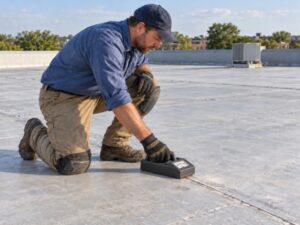
That is why moisture evaluation should inform the coating recommendation and repair scope. Depending on the roof assembly, suitable methods may include:
- Infrared scanning to identify temperature patterns that suggest wet areas
- Appropriate moisture meters to help map suspect locations
- Targeted core cuts to inspect roof layers and confirm findings, followed by proper repair of the sample openings
Wet insulation and damaged materials should be removed and replaced before coating. There is no single moisture percentage that determines whether every roof should be restored or replaced. The extent and location of moisture, roof condition, repair costs, and manufacturer requirements all affect that decision.
Repairs Before Coating
Next, the weak spots need attention. A coating is not a substitute for repairing open seams, failed flashing, or other underlying defects.
Common repairs include:
- Repairing open seams and laps
- Replacing loose, damaged, or corroded fasteners on metal roofs
- Repairing flashing around vents, skylights, and walls
- Repairing damaged blisters and affected roofing materials
- Addressing drainage problems and persistent ponding where needed
These repairs give the coating a sound base.
Getting the Roof Ready
Preparation is the part most people never see, but it strongly affects how well the coating performs.
The roof needs cleaning to remove dirt, chalking, biological growth, and other residue. The cleaning method and pressure must be suitable for the existing roof. The surface must then dry before application.
Adhesion testing helps evaluate the proposed preparation, primer, and coating together. A test patch is applied, cured, and assessed according to the manufacturer’s procedure. Poor results may call for different preparation or a different system, rather than simply adding primer.
Weather matters, too. Late spring through early fall may offer suitable coating windows in Baraboo. Actual roof and air temperatures, humidity, dew, rain forecasts, and curing time must meet the selected product’s requirements.
How the Coating System Goes On
The application sequence depends on the selected coating system. It may include:
- Detail treatment at seams, fasteners, and flashing, using compatible reinforcement or sealant where specified
- A base coat sprayed or rolled over the roof, if required
- Additional coats applied according to the manufacturer’s directions
- Thickness checks during application and a final review after curing
Thickness is a big deal. A coating that is too thin may not perform as intended or qualify for the specified warranty. Wet film thickness checks and material-use records help verify application, while the finished coating must meet the required dry film thickness.
The type of coating matters as well. Acrylic can be a good value on suitable roofs that drain well. Many silicone systems tolerate ponding water and UV exposure, but persistent ponding still needs a drainage assessment. Our post on silicone roof coating in Marshfield, WI explains that coating type in more detail.\

Product Warranty vs. Expected Service Life
Many owners mix these two up, but they are not the same.
A product warranty defines the coating manufacturer’s coverage for specified defects, subject to written terms. Some warranties cover material only. Other system warranties may include labor or specified leak coverage. Duration and eligibility can depend on the system, thickness, preparation, installation, inspections, and maintenance.
Expected service life is how long the coating actually performs. That depends on preparation, thickness, drainage, weather exposure, and upkeep. A maintained coating may remain serviceable beyond its warranty period. Poor preparation or unresolved moisture can cause early failure, even when a long warranty was offered.
Many suitable coating systems can be cleaned and recoated when they begin to wear. Recoating requires an assessment of the existing coating and roof assembly, along with any necessary repairs. It does not automatically renew every part of the roof or restart its life from zero.
Get Honest Roof Coating Help in Baraboo
A useful coating recommendation should explain the roof’s condition, moisture findings, required repairs, and why the proposed system is suitable. A clear scope also helps you compare restoration with replacement and understand the project’s costs.
Need roof coating in Baraboo, WI? Contact Golden Eagle Roofing at 608-633-6719 to discuss your building, available services, and the next step for evaluating your roof.
Frequently Asked Questions
How long does a roof coating last in Baraboo, WI?
Service life depends on the coating system, installed thickness, preparation, drainage, weather exposure, and maintenance. Use the specified product’s manufacturer guidance for planning. Regular inspections and timely repairs help maintain performance, but warranty length is not a service-life guarantee.
Can you coat a roof that leaks?
A leaking roof may still qualify for coating, but the leak source must be identified and repaired first. Wet insulation and damaged roofing materials should be replaced before application. Widespread damage may make replacement more suitable.
Is silicone or acrylic better for my roof?
The choice depends on the substrate, drainage, compatibility, and project requirements. Acrylic can suit roofs that drain well. Some silicone systems tolerate ponding conditions, but they do not correct the underlying drainage problem. Compare specific products and their requirements.
Can roof coating be done in winter?
It depends on the product and actual conditions. Roof and air temperatures, humidity, dew, and curing time must meet the manufacturer’s requirements. Wisconsin winter conditions often limit suitable application windows.
Does a coating replace a new roof?
No. A coating can help extend the service life of a suitable existing roof, but it does not replace damaged decking, wet insulation, or a failing roof assembly. Extensive deterioration may require replacement.
What does a roof coating warranty usually cover?
Coverage depends on the written warranty. Some cover specified material defects only, while others may include labor or leak coverage. Required inspections, maintenance, exclusions, and installation conditions should be reviewed before work begins.