Maybe it started with a brown spot on the ceiling. Or a bucket in the back room that fills up every time it rains. Flat roof leaks have a way of sneaking up on people, and in Stevens Point, snowmelt can reveal problems that developed during winter.
The good news is that a leak doesn’t automatically mean you need a new roof. Sometimes the problem is one open seam or a cracked boot around a pipe. For more about rubber roofing systems, see our information on EPDM Roofing Stevens Point, WI.
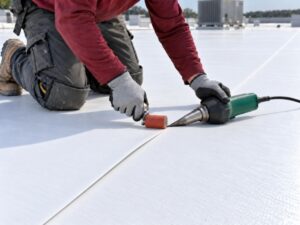
Below, we’ll walk you through what can be fixed, how repair methods differ, and when a patch won’t cut it.
What Can Be Fixed on a Flat Roof
Seams are a common trouble spot. Many flat roofs use sheets joined with tape, adhesive, or heat-welded seams, depending on the material. If a seam opens, water can slip underneath. Holes and tears are another concern. Dropped tools, impact damage, or branches after a windstorm can puncture the surface. Rooftop service traffic can also cause damage.
Bubbles or blisters can develop when air or moisture becomes trapped within the roofing system. Some remain stable, while others split or indicate a deeper problem. They need assessment rather than being opened automatically. Older rubber roofs can also shrink and pull away from edges and walls. Flashing around vents, pipes, and skylights may crack or come loose over time. If damage is localized and the surrounding roof is sound, repair often makes sense.
How Repairs Depend on Your Roof
Not every flat roof is the same, and the patch has to match. Putting the wrong material on a roof can cause another problem. On an EPDM rubber roof, a typical repair involves approved cleaning, primer, and compatible patch materials or seam tape. Proper rolling and surface preparation help establish the bond.
TPO roofs commonly use heat-welded repairs. After suitable preparation, a compatible TPO patch is welded over the damaged area. Color alone does not identify the membrane, so the roof material must be confirmed first. Modified bitumen roofs need compatible repair materials and methods, which may be cold-applied, self-adhered, or heat-applied as appropriate for the system and site.
Tar and gravel roofs can take more work. Repairs may involve moving the gravel aside, removing damaged materials, rebuilding the affected layers, and restoring the surfacing. Simply spreading general-purpose caulk over a leak is not a substitute for a repair suited to the roof system.
Why Drainage and Flashing Need Checking
A flat roof repair in Stevens Point, WI should address the source of the leak and any nearby conditions contributing to it.
First, consider how water leaves the roof. Drains, scuppers, gutters, and downspouts can become blocked by leaves, dirt, or ice. Low spots also deserve attention. Water remaining about two days after rain warrants a drainage assessment; repeated patching will not correct the cause of ponding.
Flashing seals the roof where it meets a wall, chimney, AC unit, or pipe. These details experience movement as temperatures change. Over time, flashing can crack, separate, or pull loose.
If you own a building, it pays to arrange an assessment before there’s a leak. Commercial Roof Inspections Stevens Point, WI can help owners identify visible issues and plan maintenance or repairs.
When a Patch Isn’t Enough
A patch cannot solve every roofing problem. The condition of the surrounding roof and underlying materials matters as much as the visible opening.
Wet insulation is a major concern. A patch on top cannot dry the layers below. Persistent moisture can reduce insulation performance and contribute to deterioration. Soft or spongy areas may indicate underlying problems and should be assessed by a professional. Testing may be needed to confirm hidden moisture or damage.

Leaks in several places, widespread deterioration, and repeated repairs can point toward a larger project. Age matters too, but it does not determine the answer by itself. Depending on the findings, options may include localized repair, replacement of a section, restoration of a suitable roof, or full replacement. A coating is not a solution for wet insulation or damaged decking.
How Completed Repairs Should Be Checked
Completed repairs need checks appropriate to the material and repair method. For heat-welded membranes, this commonly includes probing cooled welds according to the manufacturer’s instructions. EPDM tape and adhesive repairs require their own installation and inspection procedures; the same probing method is not suitable for every patch.
Controlled water testing may be appropriate when it can be performed safely without causing additional damage. Drainage conditions and nearby flashing should also be considered.
The agreed scope should identify cleanup, any included testing, and the records provided. Before-and-after photos and written notes can help owners understand the work without climbing onto the roof.
Don’t Wait Until Spring
Winter is rough on flat roofs. Snow adds weight, ice can obstruct drainage, and snowmelt can expose existing openings.
A small leak noticed in October can lead to damaged ceilings or wet insulation if it is left unresolved. Arrange a prompt assessment. Permanent repair depends on safe access, weather, and product requirements; temporary protection may be needed when conditions prevent lasting work.
Call Golden Eagle Roofing
Need flat roof repair in Stevens Point, WI? Contact Golden Eagle Roofing to discuss the leak, your roof type, and the assessment needed to establish a suitable repair scope.
Call 608-633-6719 or email Sales@GoldenEagleRoof.com to discuss your roof.
Frequently Asked Questions
1. How can I tell if my flat roof needs repair?
Watch for ceiling stains, persistent ponding, blisters, cracks, or lifting seams. A musty smell can also indicate moisture, though it does not identify the source. Leave rooftop checks to trained professionals.
2. Can you fix a flat roof in winter?
Some repairs can be completed in cold weather when conditions meet the selected products’ requirements. Adhesives, primers, sealants, and coatings have application limits. Temporary protection may be appropriate until weather allows a permanent repair.
3. How long will the repair last?
If the surrounding roof is sound, a properly completed repair can last for years. Longevity depends on material compatibility, installation, roof condition, weather exposure, drainage, and maintenance.
4. Should I repair or replace my flat roof?
Localized damage on an otherwise sound roof often favors repair. Widespread deterioration, extensive wet insulation, damaged decking, or recurring leaks may favor larger repairs or replacement. An assessment helps establish which option makes sense; age alone is not enough.
5. Do you work on homes and businesses?
Contact Golden Eagle Roofing with your property type, location, and roof details to confirm service availability and the appropriate assessment for your project.
6. How often should I have my flat roof checked?
Spring and fall inspections are a useful baseline in Wisconsin, with additional checks after severe weather or potentially damaging rooftop work. Follow any specific inspection and maintenance requirements from the roof manufacturer.