When snow melts on a Stevens Point roof, water can find its way through an open seam or a gap around a vent. If your flat or low-slope roof leaks each spring, spray foam roofing may be an option. It adds insulation in a continuous layer and can follow curves and work around pipes, vents, and other obstacles. That makes spray foam roofing for unusual roof shapes worth considering when the existing roof is a suitable base.
Golden Eagle Roofing offers spray foam roofing in Stevens Point, WI. Call (608) 633-6719 to discuss your roof and find out whether foam is a good fit.
Why Stevens Point Roofs Benefit From a Seamless System
Snowmelt and freeze-thaw cycles can put stress on aging seams, fasteners, and flashing. Spray polyurethane foam, or SPF, goes on as a liquid, expands into a rigid layer, and bonds to a properly prepared surface. Because the foam is sprayed in place, there are no sheet seams across the roof surface. Flashing and drainage still matter, especially around drains, walls, and rooftop equipment.
The foam also adds insulation, which helps slow heat loss in winter and heat gain in summer. The effect on energy use depends on the building and the insulation already in place.
Roof Insulation vs. Interior Spray Foam: Not the Same Job
Interior spray foam is used in spaces such as walls, attics, and rim joists to insulate and limit air leaks. Spray foam roofing is installed on the outside of a building. It uses rigid, closed-cell foam formulated for roofing. A protective coating shields the foam from sunlight and weather. Together, the foam and coating form an insulated roof system.
The Spray Foam Roofing Process, Step by Step
A spray foam roof depends on the work underneath it. Here’s what a typical installation involves.
Step 1: Substrate Preparation
The substrate is the surface the foam bonds to. It may be metal, concrete, built-up roofing, or a compatible existing membrane. Before foam goes on, the roof should be checked for trapped moisture, damaged decking, and loose material. Wet insulation and damaged sections need to be addressed before they’re covered.
Dirt, loose gravel, rust, and other contaminants that could prevent a good bond are removed. The surface must be dry, and some substrates need a compatible primer. Temperature and wind conditions also need to be within the system’s application limits.
Step 2: Foam Application
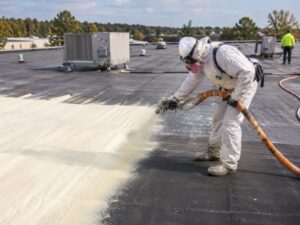
Applicators spray the foam in layers called passes. The foam expands and hardens in place. The finished thickness depends on the roof design and insulation goals.
Where the roof design allows it, varying the foam thickness can help direct water toward drains. The foam can also follow the shape of curbs, pipes, and vents, but those areas still need proper flashing and termination details.
Step 3: Protective Coating
Bare foam needs protection from UV exposure and weather. A compatible roofing coating, such as silicone or acrylic, goes over the foam according to the system manufacturer’s timing and thickness requirements. A light-colored coating can reflect sunlight. Where the system calls for it, granules or designated walk pads can help protect areas that see regular foot traffic.
Which Buildings Are a Good Fit?
Spray foam can be an option for flat and low-slope roofs around Stevens Point and Plover, including:
- Warehouses and factories
- Retail stores, offices, and churches
- Farm buildings and machine sheds
- Metal buildings that need roof work and added insulation
- Homes with suitable flat or low-slope roof sections
The building type is only a starting point. The existing roof’s condition, drainage, and compatibility determine whether foam is a good fit. If you also own property farther west, see our guide to spray foam roofing in Eau Claire, WI.
How to Maintain Your Spray Foam Roof
- Schedule roof checks in spring and fall and after severe storms.
- Keep drains, gutters, and scuppers clear so water can leave the roof.
- Have punctures, damaged coating, or exposed foam checked promptly.
- If snow removal is needed, have a professional use methods that protect the coating.
- Plan recoating based on the coating’s condition and the manufacturer’s maintenance guidance.
When the foam and roof underneath are still sound, a roofer can often repair worn areas and renew the coating without tearing off the whole roof.

Why Choose Golden Eagle Roofing in Stevens Point
Golden Eagle Roofing serves Stevens Point and offers spray foam alongside other low-slope roofing options. If you’re dealing with recurring leaks, poor drainage, or a roof crowded with equipment, start by finding out whether the existing roof can support a foam system.
Call (608) 633-6719 or contact Golden Eagle Roofing to discuss your roof and request an estimate.
Frequently Asked Questions
How long does a spray foam roof last in Stevens Point?
A well-maintained spray foam roof can last for decades. The protective coating wears over time. If the underlying foam is sound, the coating can often be renewed without replacing the entire roof.
Can spray foam go over my old roof?
Sometimes. The existing roof must be dry, sound, and compatible with the foam system. A roof evaluation can identify wet or damaged areas and help determine whether to install over the existing roof or remove it first.
Is spray foam roofing good for cold Wisconsin winters?
It can be. Closed-cell roofing foam adds insulation that helps slow heat loss. Its continuous surface also removes sheet seams as a route for meltwater, while proper flashing and drainage help protect roof edges, vents, and drains.
What weather do you need to install a spray foam roof?
The roof surface must be dry, and the temperature and wind must be within the product’s application limits. Rain, frost, and dew can interfere with adhesion. The protective coating also needs suitable weather to cure.
Is roof spray foam the same as the foam used in attics?
No. Roofing foam is a rigid, closed-cell product designed for an exterior roof system with a protective coating. Attic and wall foam products are formulated for interior insulation applications.
How much does spray foam roofing cost?
Cost depends on roof size and condition, how much preparation or repair is needed, foam thickness, and the coating system. Call Golden Eagle Roofing at (608) 633-6719 to request an estimate.