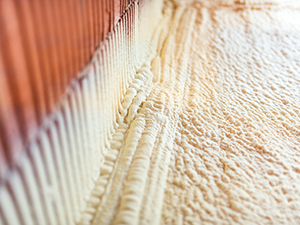
Spray foam roofing can be a practical option for some commercial buildings because it creates a continuous insulated layer with relatively little added weight. It also has specific preparation, coating, drainage, and maintenance requirements that should be understood before a contractor recommends it. Golden Eagle Roofing installs spray foam systems within its Wisconsin service area. Call (608) 633-6719 to discuss whether your roof is a suitable candidate.
Why Spray Foam Roofing
Spray polyurethane foam, often called SPF roofing, is applied as a liquid that expands and cures into a continuous layer over a properly prepared roof surface. That continuous application can reduce the number of seams and can conform around curbs, penetrations, and irregular roof geometry more easily than rigid sheet materials.
The foam layer also provides insulation, which can reduce heat transfer through the roof assembly. That does not guarantee a specific reduction in energy bills because building insulation, HVAC performance, occupancy, air leakage, climate, and the rest of the envelope all affect energy use.
SPF is not a finished weathering surface by itself. The foam needs a compatible protective coating that shields it from ultraviolet exposure and surface wear. Golden Eagle Roofing’s current spray foam roofing guidance also emphasizes preparation, application, coating, and maintenance as important parts of long-term performance.
What Spray Foam Roofing Does Well and Where Its Limits Are
| Condition or Benefit | What Supports Good Performance | Important Limitation |
|---|---|---|
| Continuous application | Proper surface preparation and consistent application around seams, curbs, and penetrations | A seamless application does not make every underlying defect disappear or eliminate the need for repairs. |
| Insulation | Correct foam thickness and a sound roof assembly | Energy savings vary by building and should not be guaranteed from the roofing system alone. |
| Low added weight | A roof deck and substrate suitable for the proposed system | Low weight does not prove the existing structure or deck is sound. |
| Protective coating | Compatible coating, correct coverage, maintained surface condition, and prompt repair of damage | The coating can wear, crack, or be punctured and should not be treated as maintenance-free. |
| Drainage | Roof geometry and drains that move water as intended | SPF should not be used to hide an unresolved drainage or structural problem. |
What Owners Can Watch for Between Professional Inspections
Building owners and facility teams can note visible changes without attempting roof-level diagnosis. Interior leaks, new ceiling stains, recurring ponding observed from a safe location, or reports of roof-surface damage after rooftop service work are all reasons to schedule an assessment.
On the roof, a qualified contractor may find coating wear, exposed foam, punctures, cracks, blistering, damaged details, or drainage concerns. Those observations should be documented rather than guessed at from an interior symptom alone. A rise in utility costs can justify looking at the whole building, but it does not by itself prove that the foam roof has failed.
What a Contractor Should Assess Before Recommending SPF
A contractor should first identify the existing roof assembly and evaluate whether the substrate is suitable for adhesion. The assessment should also review active leaks, suspected moisture, deck condition where accessible, drainage, penetrations, previous repairs, rooftop traffic, and whether existing materials are compatible with the proposed foam and coating system.
If concealed moisture is suspected, screening can help identify areas that deserve closer investigation, but important findings should be confirmed when they would materially change the scope. Wet insulation, deteriorated decking, contamination, or unresolved drainage can require repairs or removal before spray foam becomes an appropriate option.
Golden Eagle Roofing’s foam roofing article for Eau Claire also stresses that installation quality and maintenance affect long-term performance. For an owner comparing contractors, the important question is how the roofer evaluates the existing roof and defines the preparation, coating, drainage, and follow-up work in writing.
About Us

Golden Eagle Roofing has more than a decade of experience and provides commercial roofing services across its Wisconsin service area. Its commercial scope includes spray foam installation along with coating, single-ply, repair, maintenance, and inspection work.
For spray foam roofing, contractor selection should focus on the assessment and written scope rather than broad promises. Ask what preparation is required, how wet or damaged materials will be handled, what coating system is proposed, what application requirements will be followed, how drainage will be addressed, and what inspection or maintenance duties remain after installation.
When to Request Another Assessment
Schedule an assessment when leaks recur, coating damage exposes foam, punctures appear after rooftop work, ponding persists, or a previously repaired area begins failing again. A broader review is also appropriate before recoating if the contractor needs to confirm adhesion, moisture conditions, drainage, or the condition of the existing foam beneath the protective surface.
Call Golden Eagle Roofing at (608) 633-6719 to discuss whether spray foam roofing fits your commercial building and what evidence should support that recommendation.
Frequently Asked Questions
Does spray foam roofing seal itself permanently?
No. SPF creates a continuous foam layer, but it still depends on a compatible protective coating and ongoing maintenance to protect the foam from weather and surface damage.
Is spray foam roofing puncture-proof?
No. The protective coating helps shield the foam, but rooftop traffic, tools, debris, or service work can still damage the surface and require repair.
What should I ask a spray foam roofing contractor before hiring them?
Ask how they evaluate moisture, substrate condition, drainage, compatibility, preparation, coating requirements, and follow-up maintenance before recommending the system.
When should an existing foam roof be professionally assessed?
Request an assessment for recurring leaks, exposed foam, coating cracks or wear, punctures, persistent ponding, or repeat failure at a previously repaired area.