
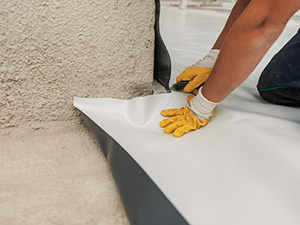
PVC roofing is one of the single-ply membrane systems commercial property owners may consider for a flat or low-slope roof. If you already have a PVC roof or are deciding whether the system fits your building, Golden Eagle Roofing can help you evaluate the roof assembly, drainage, attachment needs, insulation, rooftop activity, and service access before a recommendation is made. Call (608) 633-6719 to discuss your commercial roof.
In-depth Look at PVC Roofing
PVC, or polyvinyl chloride, is a thermoplastic roofing membrane supplied in rolls and installed as part of a single-ply roof assembly. It can be cut and detailed around curbs, vents, HVAC equipment, drains, and other rooftop penetrations. Golden Eagle Roofing also explains PVC alongside other membrane options on its commercial single-ply roofing page.
Reflective PVC membranes can reduce solar heat gain at the roof surface, but that does not make the membrane an insulation layer or guarantee lower utility bills. Actual energy performance depends on the full roof assembly, including insulation, membrane color and condition, building use, HVAC operation, climate, and other building-envelope factors.
Is PVC Roofing a Good Fit for the Building?
PVC should be selected from the building outward rather than from a list of headline benefits. The contractor first needs to understand what is already on the roof, whether the deck and substrate are suitable, how water leaves the roof, how the membrane will be attached, and how crews will reach rooftop equipment without creating unnecessary wear.
| Condition to Review | What the Contractor Should Confirm |
|---|---|
| Substrate and deck | Whether the existing surface is sound, dry enough for the proposed work, and compatible with the planned roof assembly or whether repairs or removal are needed first. |
| Drainage | Whether drains, scuppers, slope, and low areas move water effectively and whether any drainage work belongs in the project scope. |
| Attachment | Which approved attachment method fits the deck, roof design, and project requirements, and how perimeter and penetration details will be handled. |
| Insulation | What insulation is present, whether it is wet or damaged, and what insulation or cover-board work is included in the proposed assembly. |
| Rooftop activity | Where technicians regularly travel and whether service paths, protection, or additional detailing are appropriate around frequently accessed equipment. |
| Penetrations and transitions | How curbs, walls, pipes, drains, edges, and other changes in plane will be flashed and tied into the membrane system. |
This evaluation also helps separate a membrane-selection decision from an installation decision. PVC may be suitable for one building and not another, even when both have flat roofs, because the underlying conditions, drainage, access, and project goals can differ.
Repairs and System Compatibility
Before repairing an existing membrane roof, the contractor should confirm what membrane is actually installed. PVC seams are commonly heat-welded, and repairs need materials and procedures that are compatible with the existing PVC system. A patch, adhesive, or sealant should not be selected simply because it worked on a different single-ply roof.
The contractor should also determine whether the problem is limited to a seam or puncture or whether moisture, substrate deterioration, drainage, or repeated traffic has affected a larger area. If the roof needs recurring service, a structured commercial roof maintenance plan can help track seams, flashing, drainage areas, penetrations, and prior repairs over time.
The Process
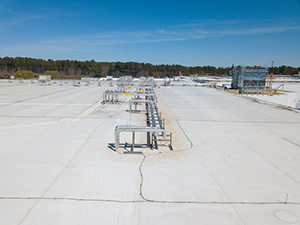
The process starts with an evaluation of the existing roof rather than an assumption that PVC is automatically the right system. The contractor should document the roof assembly, visible condition, drainage, penetrations, access needs, and any areas that may require further investigation before pricing is finalized.
If PVC is selected, the proposal should identify the preparation required, the planned attachment approach, insulation or cover-board work when applicable, flashing and penetration details, drainage-related work, major exclusions, and how concealed conditions will be handled. Installation details belong to the actual project documents and the selected system, not to a universal step-by-step sequence that applies to every building.
Building owners should also ask what closeout documentation will be provided and what maintenance expectations apply after installation. Photos, final scope records, approved changes, and written maintenance guidance can help establish what was completed and what should be monitored later.
PVC Roofing Decisions for Wisconsin Commercial Buildings
Golden Eagle Roofing serves commercial properties across its Wisconsin service area and provides single-ply installation for PVC, TPO, and EPDM systems. The right membrane depends on the building, not on a single claimed advantage. Substrate condition, drainage, attachment, insulation, rooftop traffic, service access, and detailing all need to be considered together.
If you are considering PVC roofing or need an existing PVC roof evaluated, contact Golden Eagle Roofing at (608) 633-6719 to discuss the building and the next step.
Frequently Asked Questions
Does PVC roofing provide insulation by itself?
No. PVC is a roofing membrane, not an insulation layer. The insulation and other components beneath the membrane are separate parts of the roof assembly.
Can PVC be repaired with materials used on TPO or EPDM?
Repairs should use materials and procedures confirmed to be compatible with the existing PVC system. The membrane type should be identified before the repair method is chosen.
Is PVC roofing right for every flat commercial roof?
No. Suitability depends on the roof deck, substrate, drainage, attachment needs, insulation, rooftop activity, detailing, and the building owner’s project goals.
What should an owner ask before approving a PVC roofing proposal?
Ask what conditions were confirmed, what preparation and attachment are included, how drainage and penetrations will be handled, and what unknown conditions could change the scope.