
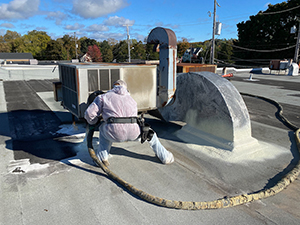
Spray foam roofing, also called spray polyurethane foam or SPF roofing, can be a practical option for some commercial buildings in Tomah, WI. Its value comes from the combination of a continuous foam layer, insulation, and a protective coating, but the system still has limits. Before choosing SPF, an owner should understand the existing roof condition, substrate compatibility, drainage, coating requirements, and maintenance needs. Golden Eagle Roofing serves commercial properties in Wisconsin and can be reached at (608) 633-6719.
How Spray Foam Roofing Works
SPF roofing is applied as a liquid that expands and cures into a continuous foam layer over a prepared roof surface. The foam can conform around penetrations and irregular details, which helps reduce the number of field seams found in some other roofing systems.
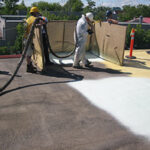
The foam itself is not the finished weathering surface. A protective coating is installed over it to shield the SPF from ultraviolet exposure, weather, and routine rooftop activity. Golden Eagle Roofing’s commercial spray foam roofing information provides additional background on the system.
The Protective Coating Is Part of the System
The coating over an SPF roof deserves the same attention as the foam beneath it. Its condition should be checked during routine inspections for wear, thinning, cracks, punctures, or other damage that could expose the foam.
Recoating intervals are not universal. They depend on the coating product, installed thickness, weather exposure, rooftop traffic, drainage, and maintenance history. An owner should ask what coating is proposed, how its condition will be evaluated over time, and what signs indicate that repair or recoating is needed.
Substrate Condition Determines Suitability
SPF needs a properly prepared surface. The existing roof or deck should be evaluated for moisture, deterioration, loose material, contamination, and other conditions that could interfere with adhesion or leave damaged materials trapped below the new system.
A roof with localized defects may be repairable before SPF is applied. Widespread wet insulation, deteriorated decking, unstable materials, or unresolved structural problems can require a different scope before a foam system is considered. Spray foam should not be treated as a way to cover over conditions that still need repair.
Drainage Still Matters
A continuous foam surface does not eliminate the need for dependable drainage. Ponding water, blocked drains, low areas, or damaged insulation can affect the protective coating and the long-term performance of the roof.
Before installation, the contractor should identify how water currently leaves the roof and whether drainage corrections are needed. SPF can sometimes be shaped during application to address localized transitions, but it should not be presented as an automatic solution for every slope or drainage problem.
Insulation Benefits Depend on the Building
SPF has insulating value and can reduce heat transfer through the roof assembly. That can support building energy performance, but the actual effect on heating or cooling costs depends on the existing insulation, HVAC efficiency, building use, roof area, air leakage, and operating schedule.
Owners should therefore treat insulation as one part of the decision rather than expect a guaranteed utility-bill reduction. The proposed foam thickness and the resulting insulation value should be documented as part of the project scope.
Punctures and Rooftop Traffic Need Attention
Spray foam roofs can be damaged by sharp objects, dropped tools, equipment work, or repeated foot traffic. A protective coating helps shield the foam, but it does not make the roof puncture-proof.
Walkways, service paths, and controlled access can help protect areas that receive regular traffic. If a puncture or coating defect is found, it should be evaluated and repaired before moisture reaches or spreads through the underlying system.
Maintenance Should Be Planned Before Installation
Owners should understand the inspection and maintenance plan before selecting SPF. Routine review should include the coating surface, penetrations, drainage, previous repair areas, and locations exposed to equipment service or foot traffic.
Golden Eagle Roofing also provides commercial roof maintenance. Whether maintenance is handled through a formal program or scheduled separately, the owner should keep records of inspections, repairs, coating condition, and any recoating work so changes can be tracked over time.
Questions to Ask Before Choosing SPF
- Is the existing roof dry and stable enough for SPF? Ask what was inspected and whether additional moisture investigation is needed.
- What preparation is included? Confirm cleaning, repairs, removal of damaged materials, and treatment of penetrations or flashing.
- What coating will protect the foam? Ask about the coating type, installed requirements, inspection needs, and future recoating expectations.
- How will drainage be handled? Make sure ponding, drains, scuppers, and low areas are addressed in the scope.
- How should rooftop traffic be managed? Ask whether walkways or protected service paths are appropriate around frequently accessed equipment.
Spray Foam Roofing in Tomah, WI
Spray foam roofing can be a useful commercial roofing option when the existing substrate is suitable, drainage is understood, the protective coating is properly specified, and ongoing maintenance is planned from the beginning. Golden Eagle Roofing can evaluate whether SPF fits a Tomah commercial property. Call (608) 633-6719 to discuss the roof and next steps.
Frequently Asked Questions
Is spray foam roofing self-sealing and puncture-proof?
No. SPF forms a continuous layer, but the system depends on a protective coating and can still be damaged by punctures or rooftop traffic.
Can spray foam be installed over any existing roof?
No. The existing roof must be evaluated for moisture, deterioration, adhesion, and other conditions that could prevent a dependable installation.
Why is drainage important on an SPF roof?
Ponding water and drainage defects can stress the coating and affect long-term performance, so drainage should be evaluated before installation.
Does spray foam roofing lower energy bills?
SPF adds insulation, but actual energy results depend on the complete building, including existing insulation, HVAC efficiency, air leakage, and operating conditions.