
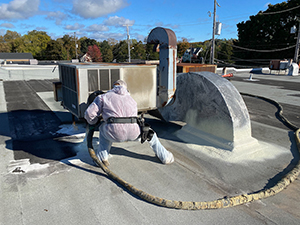
Foam roofing is one option for commercial buildings in Marshfield, WI, especially when a property owner wants a lightweight, insulated roofing system that can form a continuous surface across a low-slope roof. The system is not a universal fit, though. Roof condition, drainage, substrate preparation, rooftop traffic, and the owner’s ability to maintain the protective coating all matter. Golden Eagle Roofing installs spray polyurethane foam roofing and can evaluate whether it is appropriate for your building. Call (608) 633-6719 to discuss your commercial roof.
How Spray Foam Roofing Is Applied
Spray foam roofing uses spray polyurethane foam, often shortened to SPF, as part of a complete roof system. Before application, the existing roof assembly or deck needs to be evaluated and prepared so the new material has a suitable surface for adhesion. Debris, loose materials, wet components, damaged areas, or other conditions may need to be addressed before the foam is installed.
The foam is spray-applied in controlled lifts and expands as it is installed, allowing trained applicators to build a continuous insulated layer and shape the roof surface around penetrations and other details. Application thickness and surface texture need to be controlled during installation. Once the SPF has been installed, a compatible protective covering is applied over it as part of the roofing system.
That protective layer matters because exposed SPF is not intended to serve as the finished weathering surface by itself. The coating helps protect the foam from ultraviolet exposure, routine surface wear, and weather. The finished system can also provide continuous thermal insulation, which may help reduce heat transfer through the roof assembly when the system is properly designed and installed.
Protective Coating Maintenance Is Part of the System
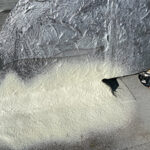
Like any roofing system, an SPF roof needs maintenance. The protective coating can wear, weather, or be damaged over time, and punctures from tools, debris, or repeated rooftop traffic should be addressed before water reaches the foam or underlying roof assembly.
Inspections should look at the condition of the coating, penetrations, drains, flashings, repaired areas, and locations that receive regular foot traffic. An additional inspection is also sensible after severe weather or any event that may have damaged the roof. The goal is to find coating wear or localized damage while the affected area can still be addressed in a controlled way.
Recoating is not something that should be scheduled by one universal number of years. The right timing depends on the coating material, installed thickness, climate exposure, roof traffic, maintenance history, and actual condition found during inspection. A contractor should inspect the existing surface and determine what preparation or repairs are required before a renewal coating is applied.
Is Foam Roofing Suitable for Your Commercial Building?
Foam roofing can be useful on many low-slope commercial roofs, but the existing assembly still has to be a suitable candidate. The roof should be evaluated for substrate condition, moisture, drainage, attachment, and damaged materials before an SPF system is recommended. Wet insulation or deteriorated components should not simply be covered and forgotten.
Drainage is another important consideration. SPF can be shaped during installation, but that does not mean every drainage or structural problem can be corrected with foam alone. Persistent ponding, inadequate drains, structural deflection, or damaged decking may require separate corrective work before a new roof system is installed.
Rooftop use also affects suitability. Buildings with frequent service traffic around HVAC equipment or other rooftop systems may need defined walk paths, additional protective measures, or a different roofing approach. Property managers should consider how often people will be on the roof and how maintenance crews will reach equipment without unnecessarily damaging the surface.
Why Lightweight Construction Can Matter
SPF roofing is relatively lightweight compared with some heavier roofing assemblies. That can be useful on a building where adding unnecessary roof weight is a concern. However, lightweight construction should not be described as a cure for structural or foundation problems. If there are questions about the capacity or condition of the building structure, those issues should be evaluated independently before roofing work proceeds.
The value of foam roofing comes from how the complete system fits the building: substrate preparation, SPF application, protective coating, drainage, details, and ongoing maintenance. A strong recommendation should consider all of those factors rather than treating foam as automatically better than another commercial roofing system.
Foam Roofing in Marshfield, WI
If you own or manage a commercial building in Marshfield, WI and are considering a foam roof, Golden Eagle Roofing can evaluate the existing roof and discuss whether SPF fits the property. The company offers spray foam installation along with commercial roof inspection, repair, and maintenance support.
If you already have a foam roof, an inspection can help identify coating wear, punctures, drainage concerns, or areas that may need repair before recoating. Contact Golden Eagle Roofing through our office or call (608) 633-6719 to discuss your commercial roofing needs.
Frequently Asked Questions
Does spray foam roofing always go over the existing roof?
No. The existing roof assembly must be evaluated first, and unsuitable, wet, loose, or damaged materials may need corrective work before SPF is installed.
Why does a foam roof need a protective coating?
The coating protects the SPF from ultraviolet exposure, weathering, and routine surface wear. Its condition should be checked during roof inspections and renewed when the actual system condition calls for it.
Can foot traffic damage a foam roof?
Yes. Tools, debris, and repeated traffic can damage the protective surface, so active rooftop service areas may need added protection and prompt repair when damage occurs.
Is foam roofing right for every low-slope commercial roof?
No. Substrate condition, moisture, drainage, rooftop traffic, and maintenance requirements all affect suitability, so the roof should be evaluated before SPF is recommended.