
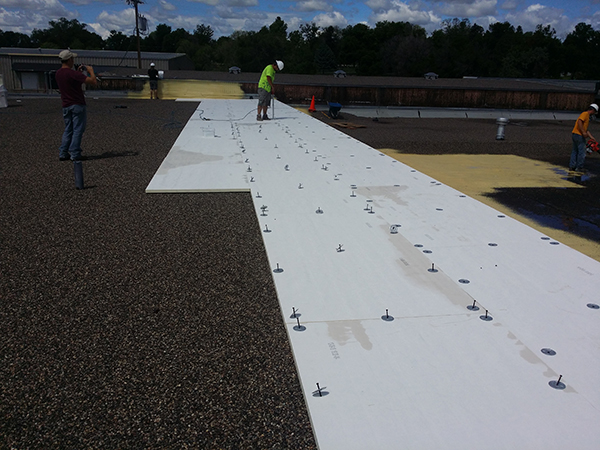
Commercial buildings in Onalaska face demanding seasonal conditions, from freezing winter temperatures to summer heat and heavy precipitation. When an aging low-slope roof reaches the replacement stage, choosing the right system requires looking beyond initial cost and considering building use, durability, maintenance needs, and long-term performance. Flat roof replacement gives property owners an opportunity to select a system suited to the building rather than simply replacing the existing membrane with the same material.
Call Golden Eagle Roofing at (608) 633-6719 for flat roof replacement in Onalaska, WI.
Flat Roof Replacement System Options
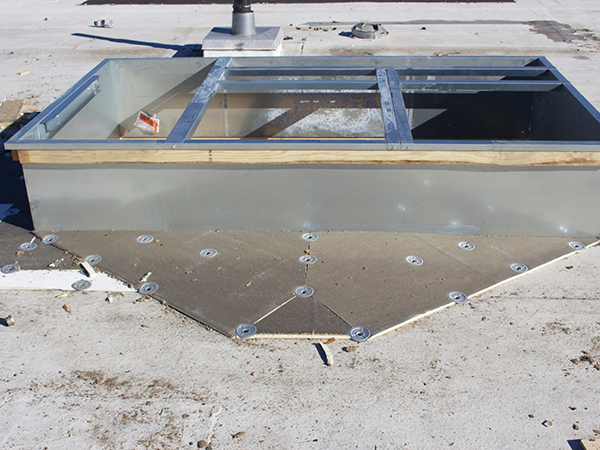
TPO, or thermoplastic polyolefin, is a single-ply membrane that combines flexibility with resistance to UV exposure and weathering. Its reflective surface can help reduce heat absorption during summer, making it a practical option for many warehouses, retail buildings, and commercial facilities. TPO is also heat-welded at the seams, creating strong connections between membrane sections. The trade-off is that installation quality and proper detailing around penetrations remain essential to long-term performance.
EPDM is another established single-ply option. Made from synthetic rubber, it is flexible and performs well through temperature changes, making it suitable for Wisconsin’s seasonal climate. EPDM is often considered for buildings where flexibility and proven weather resistance are priorities. Its dark surface absorbs more solar heat than reflective membranes, which may be a consideration for buildings with significant summer cooling demands.
Comparing Flat Roof Replacement Materials
PVC offers another single-ply membrane choice, particularly for buildings where chemical resistance, grease exposure, or demanding rooftop conditions are concerns. Like TPO, PVC seams are heat-welded, creating a strong bond between membrane sections. The material can provide excellent long-term performance, although its higher initial cost may make it less attractive when the building does not require its specialized properties.
Spray polyurethane foam, commonly called SPF, takes a different approach. Instead of installing large membrane sheets, the material is sprayed directly onto the roof and expands to create an insulating, seamless surface. A protective coating is applied over the foam to shield it from UV exposure and weather. This system can be particularly useful where improved insulation, drainage improvements, or reduced seams are priorities.
Choosing the Right Replacement System
The building’s age and existing roof condition should also influence the replacement decision. Before selecting a membrane, the underlying roof deck, insulation, drainage, and existing moisture conditions should be evaluated. A roof with widespread wet insulation or damaged decking may require more extensive preparation before the new system is installed.
The replacement method matters as well. Depending on the existing assembly and its condition, the old membrane may be removed completely or, where appropriate, a new system may be installed over an existing roof. A full tear-off allows damaged materials and wet insulation to be removed, while an approved recovery system may reduce disruption when the existing assembly is suitable for another layer.
Making a Flat Roof Replacement Decision
There is no single flat roofing system that makes sense for every commercial property. The right choice depends on the building’s use, existing assembly, insulation requirements, rooftop conditions, expected maintenance, and long-term ownership plans.
For flat roof replacement in Onalaska, WI contact Golden Eagle Roofing at (608) 633-6719 today.
FAQ
When replacing a flat roof in Onalaska, is it better to tear off the old membrane or install over it?
A tear-off is generally appropriate when the existing assembly contains widespread moisture, damaged insulation, or compromised decking. A roof recover may be possible when the existing materials are dry, structurally sound, and compatible with the proposed system. The condition of the entire assembly should be evaluated before making that decision.
How do TPO and EPDM compare for a commercial building in Wisconsin?
Both can provide durable performance in Wisconsin, but they have different characteristics. TPO has a reflective surface that can reduce solar heat absorption, while EPDM offers flexible rubber construction that handles temperature changes well. Building use, cooling requirements, roof exposure, and project goals should determine which is the better fit.
Does building age affect which flat roof replacement system makes the most sense?
Yes. Older buildings may have outdated insulation, drainage limitations, structural concerns, or multiple existing roof layers that affect the replacement strategy. Evaluating the entire roof assembly helps determine whether the new system should address those conditions as part of the replacement.