
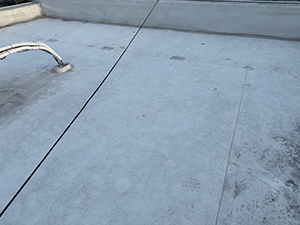
A TPO recover can be an option for some aging commercial roofs in Tomah, WI, but it should not be treated as a way to cover every existing problem. The existing roof assembly has to provide a suitable base for the new membrane, and conditions such as trapped moisture, damaged insulation, deteriorated substrate, drainage problems, or incompatible materials may need corrective work before a recover can proceed. Golden Eagle Roofing can be reached at (608) 633-6719 to discuss whether a recover is appropriate for the building.
When Can a Commercial Roof Be Recovered With TPO?
A recover project generally keeps some or all of the existing roof assembly in place and installs a new TPO membrane over a prepared, approved substrate. That can reduce tear-off compared with full replacement, but only when the existing roof is suitable to remain. The decision should follow actual roof conditions, including insulation, substrate or deck condition, drainage, penetrations, flashing, prior repairs, and moisture evidence.
If concealed moisture or deterioration is suspected, the scope should explain what remains unknown and whether additional investigation is needed. A recover should not simply hide a condition that could continue damaging insulation, decking, or other parts of the roof assembly.
Moisture and Existing Damage Need to Be Addressed First
Wet insulation, deteriorated decking, damaged substrate, or widespread failed areas can change whether a recover makes sense. Surface appearance alone may not show moisture below the roof, so suspected concealed damage should be distinguished from confirmed findings. The key question is whether the remaining assembly can provide a sound, dry, compatible base after required corrective work.
Existing Roof Layers and Compatibility Matter
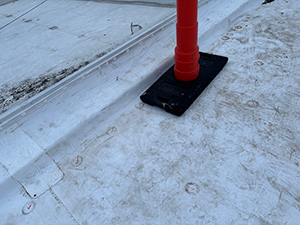
TPO, or thermoplastic polyolefin, is a single-ply roofing membrane used on many commercial low-slope roofs. In a recover application, the new membrane must be installed over a substrate or separation layer that is compatible with both the existing roof and the proposed TPO system.
The contractor should identify what roof materials are already present and whether coatings, adhesives, insulation, cover boards, or previous repairs affect the proposed assembly. Existing layers can influence whether a recover is practical, but suitability should come from the actual roof and selected system rather than a universal layer-count rule.
The existing commercial single-ply roofing page provides broader TPO system context, while this page is specifically about whether an existing Tomah roof is a suitable recover candidate.
Attachment Has to Match the Building and Roof Assembly
A TPO recover may use an approved mechanically attached, adhered, or other system-specific method depending on the deck, substrate, insulation, building conditions, and selected assembly. The proposal should explain how the membrane will be secured, what preparation is required, and how perimeter, penetration, edge, and flashing details will be handled.
Drainage and Rooftop Conditions Still Matter
A new membrane does not correct every underlying roof condition by itself. Ponding, blocked drains, poor drainage paths, damaged penetrations, or recurring problems around rooftop equipment should be evaluated separately. If those conditions affect the proposed recover, they should be included in the corrective scope instead of being covered and left unresolved.
Rooftop traffic and service access also matter, especially around equipment, access paths, and frequently serviced penetrations.
Will a TPO Recover Disrupt Building Operations?
A recover can involve less removal than a full tear-off, which may reduce some disruption, but normal operations should never be guaranteed in advance. Noise, access restrictions, rooftop equipment coordination, weather, safety zones, staging, and corrective work can all affect operations. The contractor should explain expected work zones and limitations before the project starts.
Energy Performance Should Be Evaluated, Not Promised
Reflective TPO surfaces can reduce solar heat gain at the roof surface, but that does not guarantee a specific reduction in energy costs. Performance also depends on insulation, HVAC operation, building use, climate, and the rest of the roof assembly.
What Should the TPO Recover Proposal Document?
A useful proposal should identify the existing roof condition, moisture or substrate concerns, preparation requirements, corrective work, attachment method, drainage-related work, flashing details, exclusions, and how concealed conditions will be handled. Closeout should document the completed scope, approved changes, and applicable warranty information.
TPO Recover Assessment in Tomah, WI
A commercial roof in Tomah can be a candidate for a TPO recover when the existing assembly can remain as a sound, dry, compatible base and the project accounts for moisture, damage, drainage, attachment, and rooftop conditions. The goal is not to cover existing problems. It is to determine whether the existing roof can support a properly scoped recover after the necessary corrective work is completed.
For more information about related commercial systems, see Golden Eagle Roofing’s commercial roofing options, or contact the office at (608) 633-6719 to discuss the roof condition.
Frequently Asked Questions
Can a TPO recover fix every existing roof problem?
No. Moisture, damaged insulation, deteriorated substrate, drainage problems, and other unsuitable conditions need to be addressed rather than covered over.
Does a TPO recover always keep the building open?
No. A recover may involve less removal than replacement, but project disruption depends on access, noise, safety zones, weather, equipment coordination, and corrective work.
How is a TPO recover attached?
The attachment method depends on the deck, substrate, insulation, building conditions, and selected roof system. The proposal should explain the approved method for the specific project.
What conditions can make a recover unsuitable?
Extensive moisture, deteriorated deck or substrate, incompatible existing materials, widespread damage, or other conditions that prevent a reliable new assembly can shift the project toward a broader corrective or replacement scope.