
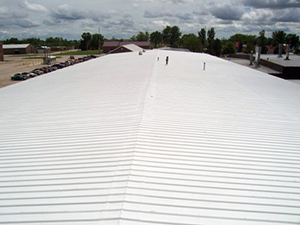
A metal roof coating can be a practical restoration option for some commercial roofs, but it is not automatically the right answer for every metal system. Before coating is specified, the roof should be checked for corrosion, loose or failed fasteners, open seams, flashing problems, prior coatings, contamination, and areas where the metal substrate may no longer be suitable for restoration. Golden Eagle Roofing provides commercial coating and restoration services in Tomah, WI and surrounding areas. Call (608) 633-6719 to discuss whether coating fits the actual roof condition.
What a Metal Roof Coating Can Do
A roof coating can create a continuous protective surface over a properly prepared metal roof. Depending on the coating system and roof condition, that surface can help protect exposed metal from weathering, reduce direct UV exposure, and improve water resistance at restored details.
Reflective coatings can also reduce solar heat gain compared with darker roof surfaces. Actual building-level energy savings depend on the existing roof, insulation, HVAC system, roof area, operating schedule, and climate, so reflective performance should not be presented as a guaranteed utility-cost reduction.
The existing roof coating information provides additional restoration context, but the coating still has to match the roof substrate and project conditions.
Corrosion Has to Be Evaluated Before Coating
Surface rust, finish wear, pitting, and deeper metal loss are not the same condition. A contractor should determine how extensive the corrosion is, whether the affected metal remains sound enough to restore, and whether localized repair or panel replacement is needed before coating is considered.
Coating over active corrosion without proper preparation can leave the underlying problem unresolved. The proposal should explain what corrosion treatment is included, what areas require repair first, and what conditions would make restoration unsuitable.
Seams and Fasteners Need Separate Attention
Metal roof seams and fasteners can move or deteriorate differently from the field of the panel. Open seams, failed sealant, backed-out fasteners, damaged washers, corrosion around attachment points, and movement at penetrations can all affect whether the roof is ready for coating.
A coating should not be expected to substitute for necessary mechanical repairs. If seams or fasteners are failing, the restoration scope should identify how those details will be repaired or reinforced before the field coating is applied.
Adhesion Depends on the Existing Surface
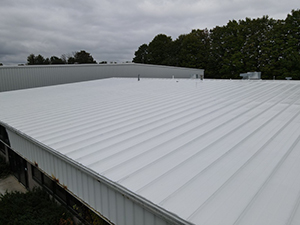
Successful coating depends on adhesion to a compatible, properly prepared surface. Dirt, oils, chalking, loose oxidation, biological growth, previous coatings, and other contaminants can interfere with bonding.
The contractor should identify the existing surface, determine what cleaning and preparation are required, and confirm that the selected system is compatible with the roof. Where adhesion is uncertain, the evaluation should follow the coating system’s requirements rather than assuming that a clean-looking surface is automatically ready.
Weather and Application Conditions Matter
Coating products have application requirements for surface condition, curing, and weather exposure. Temperature, humidity, dew, rain risk, and substrate moisture can affect application, but the acceptable range depends on the specific coating system being used.
Instead of relying on one universal weather rule, the project plan should follow the written requirements for the selected coating and account for conditions during preparation, application, and cure.
Coating Adds Material, Not Meaningful Insulation by Itself
A roof coating adds a thin protective layer to the existing roof surface, but it should not be described as adding meaningful thermal insulation by itself. Insulation performance comes primarily from the roof assembly and insulation materials below or within that assembly.
Coating also adds some material weight, even though that added load is generally much smaller than a full replacement assembly. If structural capacity is a concern on a particular building, that question should be evaluated from the actual project rather than dismissed with a universal claim that coating adds no weight.
When a Metal Roof May Not Be a Good Coating Candidate
Coating may not be appropriate when corrosion is too advanced, metal panels or attachment points are no longer sound, hidden conditions require broader investigation, or the existing surface cannot support reliable adhesion. Widespread panel failure, repeated leak locations, severe substrate deterioration, or incompatible prior materials can also change the recommendation.
In those cases, repair or replacement may be more appropriate than forcing a restoration approach onto a roof that cannot support it.
What to Verify in a Metal Roof Coating Proposal
A useful proposal should identify the coating system, surface preparation, corrosion treatment, seam and fastener work, exclusions, application requirements, and how concealed or unexpected conditions will be handled. It should also explain what final inspection or closeout documentation will be provided.
Golden Eagle Roofing’s verified commercial scope includes acrylic and silicone coatings and restoration. For a Tomah building, the strongest recommendation is one tied to the actual metal condition, preparation requirements, adhesion, detailing, and maintenance expectations. The commercial coatings page provides more service context.
Metal Roof Coating in Tomah, WI
If you are evaluating an existing metal roof, contact Golden Eagle Roofing or call (608) 633-6719 to discuss whether coating, repair, or another roofing approach better fits the documented roof condition.
Frequently Asked Questions
Is metal roof coating right for every metal roof?
No. Corrosion, panel condition, fasteners, seams, prior coatings, substrate soundness, and adhesion all affect whether restoration is appropriate.
Does metal roof coating add insulation?
Not in the same way roof insulation does. A reflective coating may reduce roof heat gain, but the coating itself should not be treated as meaningful added thermal insulation.
What needs to be repaired before coating?
That depends on the inspection findings, but corrosion, failed seams, loose or damaged fasteners, flashing problems, and unsuitable surface conditions may need correction before coating is applied.
How long does a metal roof coating last?
There is no universal service life. Performance depends on the coating system, substrate condition, preparation, application, exposure, drainage, rooftop activity, and maintenance.