
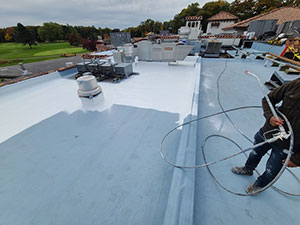
Commercial and industrial property owners in Sparta, WI can extend the life of their roofing systems with professional rubber roof coating solutions. A rubber roof coating provides durable protection against weather, UV exposure, and general wear while improving energy efficiency. Understanding the material and its benefits is key to making an informed decision for your roof.
Reach out to Golden Eagle Roofing for expert rubber roof coating services in Sparta, WI, and get answers to all your questions while protecting your commercial property. Call 608-633-6719.
Rubber Roof Coating 101
Rubber roof coating is a fluid-applied material that cures into a seamless, flexible membrane once installed. It is typically applied over existing commercial roofing systems such as EPDM, TPO, modified bitumen, or metal. After curing, the coating forms a continuous barrier that protects the roof surface from water penetration, UV exposure, and thermal movement.
Because rubber coatings remain flexible after installation, they move with the roof as temperatures change. This flexibility reduces cracking, seam separation, and surface degradation that often occur on aging flat roofs.
Types Of Businesses That Use Rubber Roof Coating
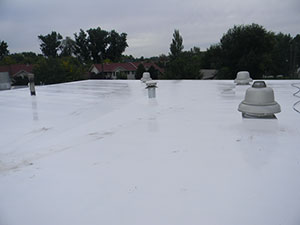
Rubber roof coatings are used across a wide range of industries, each with different functional needs. Below are common commercial and industrial property types that benefit from coating systems and the specific reasons they use them.
Warehouses And Distribution Centers
Large warehouse roofs are exposed to constant sun, wind, and temperature changes. Rubber roof coatings help by:
- Sealing seams and penetrations across large roof surfaces
- Reducing surface cracking caused by thermal expansion
- Extending roof life without interrupting storage or logistics operations
Because warehouses often operate continuously, coatings allow roof restoration without shutting down the facility.
Manufacturing And Industrial Facilities
Industrial buildings often house machinery, chemicals, or production lines that require protection from leaks and moisture intrusion. Rubber roof coatings are used to:
- Improve waterproofing over aging membranes
- Provide chemical-resistant protection depending on coating type
- Minimize downtime compared to full roof replacement
For facilities where roof failure could impact equipment or safety, coatings offer a preventive solution.
Retail And Shopping Centers
Retail buildings benefit from rubber roof coatings because they protect the building while maintaining normal business operations. These properties use coatings to:
- Prevent leaks that could damage interiors and merchandise
- Improve roof reflectivity to reduce cooling demand
- Restore aging flat roofs without disrupting tenants
Coatings help property owners avoid large capital expenses while maintaining tenant satisfaction.
Office Buildings And Corporate Facilities
Office buildings often use rubber roof coatings to maintain a stable indoor environment and protect long-term assets. Common reasons include:
- Enhancing roof durability without major construction
- Improving energy performance with reflective coating surfaces
- Preventing water intrusion that could affect ceilings, wiring, or insulation
For office environments, coatings support long-term building performance with minimal disruption.
Agricultural And Utility Buildings
Agricultural structures, equipment buildings, and utility facilities use rubber roof coatings to protect roofs exposed to moisture, sun, and seasonal weather. These coatings help by:
- Sealing aging roof surfaces
- Reducing maintenance frequency
- Protecting interior equipment and stored materials
What Roofing Systems Can Be Coated
Rubber roof coatings are compatible with many commercial roofing systems when properly prepared. Common substrates include:
- EPDM rubber roofing
- TPO and PVC membranes
- Modified bitumen roofs
- Metal roofing systems
Before application, the existing roof must be inspected to ensure it is structurally sound. Coatings are designed to restore surfaces, not correct major structural failures.
Rubber Roof Coating Application Process
A successful coating system depends on preparation and correct installation. Commercial coating projects generally follow a structured process.
- Roof Inspection: The roof surface, seams, penetrations, and drainage areas are evaluated.
- Surface Preparation: Dirt, debris, and contaminants are removed to ensure proper adhesion.
- Repairs And Reinforcement: Damaged areas, seams, or flashing are reinforced before coating.
- Coating Application: The rubber coating is applied evenly to achieve proper thickness.
- Curing And Final Inspection: The coating is allowed to cure and is inspected for coverage and consistency.
This process ensures the coating performs as a seamless protective layer.
Performance Benefits Of Rubber Roof Coatings
Rubber roof coatings provide several functional benefits for commercial properties.
- Waterproofing: Creates a continuous membrane that seals leaks and seams
- UV Protection: Shields the roof from sun damage and surface degradation
- Flexibility: Moves with the roof during temperature changes
- Extended Roof Life: Delays the need for full roof replacement
- Reduced Disruption: Applied without removing the existing roof system
These benefits make coatings an effective option for buildings seeking long-term performance without major construction.
Rubber Roof Coating Professionals
Rubber roof coating offers a cost-effective way to extend the life of commercial and industrial roofing systems without the disruption of a full replacement. This solution helps protect buildings from leaks, UV damage, and premature roof failure while improving overall performance.
Reach out to Golden Eagle Roofing for professional rubber roof coating services in Sparta, WI, and ensure your commercial or industrial property stays protected for years to come. Call 608-633-6719.
FAQ
What is rubber roof coating used for?
It is used to restore waterproofing and protect existing flat or low-slope roofs.
Can rubber roof coating stop leaks?
Yes, when properly applied, it seals seams, cracks, and penetrations.
Is roof coating better than replacement?
For structurally sound roofs, coatings can extend lifespan at a lower cost.
How long does rubber roof coating last?
Performance varies, but many systems last 10–20 years with proper application and inspections.