
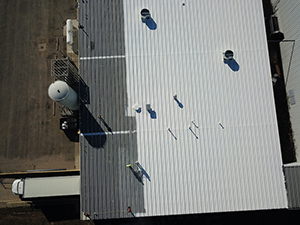
A metal roof coating can be a useful restoration option for a commercial building in Marshfield, WI when the existing roof is still a suitable candidate. The decision should come from the condition of the panels, seams, fasteners, flashing, drainage, and substrate, along with the requirements of the coating system being proposed. Golden Eagle Roofing provides commercial coating and restoration services in Wisconsin. Call (608) 633-6719 to discuss a metal roof assessment.
When a Metal Roof Coating Makes Sense
Coating should not be treated as the automatic next step for every metal roof. It is more appropriate when the panels remain serviceable, attachment is stable, corrosion can be properly prepared or repaired, seams and flashing can be restored, and the roof can meet the selected product’s adhesion and application requirements.
A coating can create a continuous protective surface over properly prepared metal and repaired details. Some systems are reflective and can reduce solar heat absorbed at the roof surface, but any effect on building energy use depends on insulation, HVAC performance, occupancy, roof configuration, climate, and the specific coating. A coating also adds material to the roof, so weight should be treated as part of the selected system’s documented specifications rather than described as zero.
Inspect the Substrate Before Coating
The contractor should document surface corrosion, panel thinning or perforation, loose or deteriorated fasteners, seam separation, damaged flashing, penetrations, prior repairs, drainage concerns, and any areas where the substrate may no longer be suitable for coating.
Corrosion matters by degree. Light oxidation or coating breakdown can be very different from metal loss or holes through the panel. Coating cannot rebuild metal that has already failed. If panels are badly deteriorated, attachment is unstable, or defects are widespread, repair or replacement may be needed before a coating system can be considered.
Repair Fasteners, Seams, and Flashing First
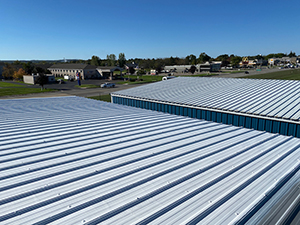
A coating should not be used to hide active defects. Loose or corroded fasteners, open seams, failed sealant, damaged flashing, and problem penetrations should be addressed as required by the proposed restoration system before the full coating is applied.
The written scope should explain how those details will be repaired and reinforced. It should also identify any conditions that fall outside the base scope, such as panel replacement, deck repair, wet insulation, or work by another trade. If concealed deterioration is discovered, the proposal should explain how additional work will be documented and authorized.
Adhesion and Compatibility Need to Be Verified
Successful coating work depends on the new material bonding to the existing roof surface. Chalking, dirt, oil, biological growth, loose rust, incompatible prior coatings, and deteriorated sealants can interfere with adhesion. Cleaning and preparation should match the actual roof condition and the manufacturer’s written instructions for the selected product.
Where the product or substrate requires an adhesion test, primer, rust treatment, or other compatibility step, that should be completed before full application. The proposal should identify the coating system being used and explain what preparation is required rather than rely on a general statement that cleaning alone will make any coating adhere.
Check Moisture and Conditions Below the Surface
A roof can look serviceable from above while still having moisture or substrate problems in isolated areas. If recurring leaks, interior staining, damaged insulation, or other evidence raises concern about concealed conditions, the contractor should explain whether further investigation is needed before coating proceeds.
Known wet materials or unstable substrate should not simply be covered. The restoration scope should identify what needs to be repaired or removed first and what findings would make coating unsuitable for part or all of the roof.
Review Product-Specific Application Conditions
Coatings have specific temperature, surface-moisture, weather, coverage, and cure requirements. The contractor should schedule application within the selected manufacturer’s approved conditions and follow the specified application rate or finished thickness for that system.
Ask how many coats or passes are required, what drying or cure time is expected between applications, and how unexpected rain, humidity, temperature changes, or surface moisture will affect the schedule. These details are more useful than a generic timeline.
What the Coating Proposal Should Document
A useful metal roof coating proposal should identify:
- The roof areas included in the project
- Observed panel, seam, fastener, flashing, and corrosion conditions
- Repairs and surface preparation required before coating
- The proposed coating system and any primer or reinforcement
- Adhesion or compatibility checks required for the existing surface
- Application rate or specified finished thickness where applicable
- Weather and cure requirements
- Known exclusions and how concealed conditions will be handled
- Warranty or maintenance requirements that apply to the selected system
This gives the building owner a clearer basis for comparing proposals.
Metal Roof Coating in Marshfield, WI
Golden Eagle Roofing lists acrylic and silicone coatings and restoration among its commercial services and serves Marshfield as a priority Wisconsin market. For a Marshfield facility, the most useful next step is a condition-based assessment that confirms whether the existing metal roof can support the proposed coating system.
Call Golden Eagle Roofing at (608) 633-6719 to discuss the roof condition, preparation requirements, and coating proposal for your commercial building.
Frequently Asked Questions
Does every commercial metal roof qualify for a coating?
No. Suitability depends on panel condition, attachment, corrosion, seams, flashing, moisture or substrate concerns, and compatibility with the proposed coating system.
What has to be repaired before a metal roof coating is applied?
Loose fasteners, open seams, failed flashing, corrosion, damaged panels, and other defects should be addressed as required by the selected restoration system.
How is coating adhesion checked?
The preparation and any adhesion testing should follow the existing substrate and the coating manufacturer’s written requirements. Primer or other compatibility steps may also be required.
How long does a metal roof coating project take?
Timing depends on roof size, repairs, preparation, weather, application rate, and cure requirements. The contractor should provide a project-specific schedule for the selected system.