You can’t see most of a flat roof replacement from the parking lot. The work that determines how the roof performs happens under the membrane and along the edges.
If you’re planning a flat roof replacement in Wisconsin Rapids, WI, start by finding out whether the old roof can stay. From there, the job moves through deck repairs, insulation and slope, membrane installation, flashing, and final checks. Site planning starts before the roof is opened and continues throughout the job. To discuss an inspection, call Golden Eagle Roofing at 608-633-6719.
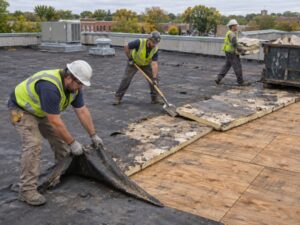
The Typical Flat Roof Replacement Sequence
- Tear off or recover: Check the existing roof for moisture and determine whether a recover is an option.
- Deck: Inspect the deck where accessible and repair damaged areas.
- Insulation: Meet applicable energy requirements and create a path for water to reach the drains.
- Membrane: Install and attach the selected system for the building’s wind loads.
- Flashing: Seal edges, walls, and penetrations.
- Site plan: Coordinate access, protection, and daily weather precautions before and during the work.
- Final checks: Review the finished roof, resolve open items, and collect closeout records.
Tear-Off or Recover: What the Code and Roof Allow
Wisconsin’s commercial building code uses the 2021 International Codes with state amendments. For a typical membrane recover, a water-soaked roof, a roof too deteriorated to support the new system, or two or more existing roof coverings can rule out an overlay. The proposed assembly also needs to meet applicable fire classification and wind uplift requirements. Before work begins, confirm the permit and inspection requirements with Wisconsin Rapids Community Development.
A recover adds a new roof covering over a suitable existing assembly. It may include a cover board, separator, or added insulation. A coating restores the existing surface without adding a new membrane assembly. See Golden Eagle Roofing’s roof coatings in Holmen, WI for an overview of coating options.
Widespread wet insulation, an unsuitable membrane, or extensive deck damage may point to a tear-off. Depending on the roof, an assessment may use infrared imaging, moisture readings, or core samples to identify and verify wet areas. Ask how the findings will be documented and how they affect the recommendation.
| Option | When It Fits | What It Requires | Limits |
|---|---|---|---|
| Full tear-off | The old assembly cannot remain, or full removal is the better option | Removal to the deck, any needed deck repairs, and a new roof system | More removal and disposal; the exposed deck needs weather protection |
| Selective removal before a recover | Damage is localized and the remaining assembly qualifies for a recover | Identify and remove affected areas, then confirm the remaining roof is suitable | Depends on reliable moisture findings and approval for the proposed assembly |
| Recover with a cover board or separator | The existing roof is dry, sound, and eligible under code and system requirements | Compatible materials, suitable attachment, and a check of the added load | Adds weight; warranty options depend on the selected system |
A full tear-off exposes the deck so the roofer can see its condition and remove wet insulation. The scope should also cover debris removal and disposal.
Checking the Roof Deck
The deck needs to support the new roof and hold its attachment. The checks depend on the deck material: steel may need a corrosion check, concrete may need a closer look at cracks or flaking, and wood may need probing for soft spots. Fastener pullout testing may be needed to verify attachment. Repair damaged areas before installing the new assembly.
Some deck damage only becomes visible after tear-off. Ask how concealed repairs will be priced, such as by the square foot or sheet. If extra work is needed, ask for photos, measured quantities, and written approval before it starts.

Insulation, Slope, and Drainage
When an existing commercial roof is part of the building’s thermal envelope and has insulation entirely above the deck, the applicable energy-code requirements need to be addressed during replacement. R-30 continuous insulation is the prescriptive reference for above-deck commercial roof insulation in Wisconsin’s climate zones. The project’s compliance path and any applicable exceptions determine the final requirement.
Insulation boards are installed and secured as part of the approved roof assembly. Tapered boards can create slope, and small raised areas called crickets can direct water around rooftop units. If the drains don’t line up with the low points, the design may need to change the slope or adjust the drains. Water still standing about 48 hours after rain in normal drying conditions is a sign to check the drainage.
A cover board can give the membrane a firm base and add protection against rooftop traffic or impact. Some assemblies or warranties specify a particular board. Extra thickness can also affect edge and curb heights, so check those details before installation.
Membrane Assembly Options
| Membrane | Attachment | Seams |
|---|---|---|
| TPO | Mechanically fastened, adhered, or induction welded | Hot-air welded |
| EPDM | Mechanically fastened, adhered, or ballasted where suitable | Typically joined with compatible seam tape and primer |
| Modified bitumen | Torch-applied, cold-adhered, or self-adhered, depending on the system | Heat-fused or adhered laps, depending on the system |
TPO is a single-ply sheet with heat-welded seams. Read more in our guide to TPO roofing in La Crosse, WI. The membrane, insulation, cover board, and attachment need to work as one assembly. The deck, building height, and wind exposure affect the attachment design. Corners and edges may need stronger attachment than the center of the roof.
Finished TPO seams should be checked after they cool, with weak spots repaired and rechecked. Ask whether the warranty you’re considering requires a manufacturer inspection.
Flashing, Edges, and Penetrations
Inspect existing flashing and replace damaged or incompatible details. Depending on the roof, the work may include termination bars, wall counterflashing, parapet caps, edge metal, and scuppers. Where tested perimeter edge metal is required, use a detail that meets the applicable requirements. Check drains for compatible clamping rings and strainers.
Added insulation can leave too little room for flashing at curbs or walls. Check the height required by the selected system before deciding whether curbs need to be raised. Ask which pipes, vents, drains, and rooftop units are included in the estimate.
Site Coordination in Wisconsin Rapids
Before work starts, agree on a site contact, roof access, parking, and an after-hours contact. Plan dumpster and equipment locations, roof loading, and protection around entrances. Coordinate HVAC shutdowns or curb work with the building manager and the relevant trades.
Ask how the crew will phase removal and protect exposed areas from rain, wind, and overnight weather. If the work uses adhesives or other products near fresh-air intakes, coordinate the precautions with the building manager before application.
Final Checks and Closeout
| Item | What to Confirm |
|---|---|
| Seams | Finished seams were checked using the method appropriate to the membrane, and defects were corrected. |
| Flashing | Edges, walls, curbs, and penetrations were reviewed. |
| Drainage | Drains, strainers, and overflow paths are clear. |
| Punch list | Open items are documented, with a plan to resolve them. |
| Cleanup | Roofing scraps and loose fasteners have been removed from the work area. |
| Warranty paperwork | Applicable terms, exclusions, and maintenance requirements are in writing. |
| Roof map and photos | Confirm which closeout records the roofer will provide. |
If the selected warranty requires a manufacturer inspection, confirm who will schedule it and how any findings will be resolved. Ask when the roof should be checked again and plan its first commercial roof maintenance visit. Keep any photos, test results, and warranties together in one roof file.
Book a Flat Roof Replacement Estimate in Wisconsin Rapids, WI
When discussing a flat roof replacement with Golden Eagle Roofing, ask what the estimate covers:
- Existing roof and deck condition, including whether moisture testing is needed
- The tear-off or recover recommendation and why it fits
- Insulation, slope, and drainage
- Membrane and attachment method
- Flashing and penetrations included in the scope
- Site coordination and applicable warranty terms
Call Golden Eagle Roofing at 608-633-6719 or contact us online to discuss your Wisconsin Rapids roof and request an estimate.
Frequently Asked Questions
How long does a flat roof replacement take?
The schedule depends on roof size, the amount of material to remove, deck repairs, and weather. Ask for an estimated schedule once the roofer has assessed the building and defined the scope.
Can a new flat roof go over my old one?
Sometimes. A recover may be possible if the existing roof is dry and sound, the structure can support the added weight, and the project meets code and manufacturer requirements. The number of existing coverings matters. Moisture testing and core samples can help determine whether the old roof can stay.
Do I need a permit in Wisconsin Rapids?
Wisconsin Rapids has a commercial remodel and repair permit process. Confirm with Community Development which permits and inspections your roofing scope requires, especially if it includes structural deck work or changes to drains or rooftop equipment. Clarify who will apply and schedule inspections before work starts.
What if the roof deck is damaged?
Repair or replace damaged sections before covering them with the new roof. If the damage is discovered after tear-off, ask for photos, quantities, and the agreed unit price in a written change order.
How much insulation does a new flat roof need in Wisconsin?
R-30 continuous insulation is the prescriptive reference for commercial roofs with insulation entirely above the deck in Wisconsin’s climate zones. For a replacement, check whether the roof is part of the building’s thermal envelope and which compliance path and exceptions apply.
How long will a new flat roof last?
Service life depends on the membrane, installation, weather exposure, drainage, and upkeep. Ask about the expected service life of the proposed system and review its warranty separately. Regular inspections, clear drains, and prompt repairs help the roof stay in service longer.