A commercial roof inspection is a visual review of accessible areas, including the membrane, seams, flashing, penetrations, drains, edge metal, and, where access is available, interior ceilings and walls. It records visible conditions. Moisture testing is a separate step that can help answer questions a visual inspection leaves open.
For example, a lifted seam next to an HVAC unit can be photographed, marked on a roof sketch, and assigned a repair priority. Those details help the owner find the same spot again and decide what to fix first. Golden Eagle Roofing also offers commercial roof inspections in Onalaska, WI. To discuss an inspection in Baraboo, call 608-633-6719.
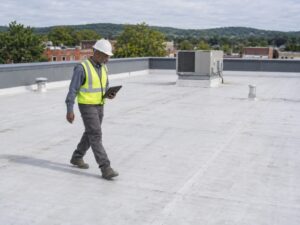
What Does a Commercial Roof Inspection in Baraboo, WI Include?
A visual inspection can cover TPO, EPDM, PVC, modified bitumen, and built-up roofing (BUR). A typical route takes the inspector from the access point around the roof perimeter and across the main roof surface, with stops at accessible penetrations, curbs, and drains. Interior ceilings and walls may also be checked for signs of water entry when access is available.
Before the visit, confirm how the inspector can safely reach the roof and any affected rooms. Share an on-site contact and any past repair records or photos that could help trace recurring problems.
| Roof Component | What to Check | What a Defect Looks Like | How to Record It |
|---|---|---|---|
| Membrane or panels | Surface condition | Cracks, blisters, or punctures | Photo and roof area reference |
| Seams and laps | Visible condition of sheet overlaps | Lifted edge or open lap | Photo and location |
| Flashing | Walls and edges | Loose flashing or gaps | Photo and wall or edge reference |
| Penetrations | Pipes, vents, and their seals | Cracked sealant or split pipe boot | Photo and penetration reference |
| Curbs and HVAC units | Curb flashing and unit base | Gaps or loose flashing | Photo and unit label or location |
| Drains and scuppers | Openings, strainers, and visible signs of poor drainage | Debris, missing strainer, or standing water | Photo and drain location |
| Edge metal and coping | Visible fasteners and joints | Loose, lifted, or bent metal | Photo and affected section |
| Interior ceilings and walls | Visible signs of water entry where accessible | Stains or drips | Photo and room location |
A visual roof inspection is separate from a structural assessment, code review, warranty approval, or examination of concealed layers. Confirm which areas and services are included when booking.
Observable Defects to Look For on Commercial Roofs in Baraboo
- Lifted seam or open lap: A welded edge may lift on TPO or PVC, seam tape may separate on EPDM, or a lap edge may curl on an asphalt-based roof.
- Shrinkage at a wall: The membrane, particularly on an older EPDM roof, may pull tight or lift where it meets a wall.
- Cracked sealant: Look for dry, split, or separated sealant around pipes, vents, and termination bars.
- Blisters: Raised bubbles can appear on built-up or modified bitumen roofs. A blister alone does not establish whether the layers below are wet.
- Punctures: Small holes can come from dropped tools, rooftop traffic, or storm debris.
- Loose edge metal: Lifted corners, open joints, or missing fasteners can signal a problem at the perimeter.
- Signs of ponding: Standing water or dirt rings suggest water has collected. A single visit may not show how long it stayed; dated observations after rain can help establish whether the problem recurs.
| Rating | What It Means | Next Step |
|---|---|---|
| Urgent | Active leak or an opening that could admit water | Arrange prompt assessment or repair |
| Repair soon | A defect that could worsen if left alone | Set a repair timeline based on condition and exposure |
| Monitor | Wear without an obvious opening or active leak | Record the location and check for changes at the next visit |
Winter maintenance: Snow-removal tools can gouge roof membranes. If snow needs to be removed, use a qualified crew that can protect both the workers and the roof.
These issues are also worth watching during commercial roof inspections in Stevens Point, WI. See our commercial roofing guide for Stevens Point for related guidance.
Photographs and Written Findings From Your Roof Inspection
A wide photo helps locate a defect, and a close-up shows what needs attention. Ask whether the inspection includes dated photos and whether the locations will be identified with a roof sketch, numbered areas, or written notes.

A useful written report describes the roof type and approximate age if known, inspection conditions, findings, and any areas the inspector could not reach. It can also record repair priorities and suggested follow-up. Here’s what one entry might look like:
| Item | Location | Finding | Severity | Recommended Action | Follow-up |
|---|---|---|---|---|---|
| 4 | Seam near north wall | Open lap with a dirt line along the edge | Urgent | Repair the lap using the membrane manufacturer’s method | Agree on a recheck date after the repair |
Keep written findings and photos together so you can plan a budget, compare repair scopes, and track how the roof changes over time.
Visual Roof Inspection vs. Testing in Baraboo, WI
A visual inspection can identify open seams, damaged flashing, stains, and other accessible signs of trouble. When the cause is unclear, the appropriate test depends on the question and the roof assembly.
| Tests that may follow a visual roof inspection | |||
| Question Raised by the Inspection | Possible Test | What It Shows | What It Needs |
|---|---|---|---|
| Where might moisture be trapped? | Infrared survey | Temperature patterns that may indicate moisture | Suitable weather and roof conditions, plus verification of suspect areas |
| Do readings suggest moisture beneath the surface? | Moisture meter survey | Relative readings or measurements, depending on the instrument and assembly | Access and a method suitable for the roof materials |
| Are the roof layers wet at a specific spot? | Core sample | The layers and their condition at the sampled location | Authorization to cut and a plan to seal the opening |
| Is there a small breach in the membrane? | Electronic leak detection | Potential membrane breaches in a compatible assembly | A suitable membrane, conductive layer, and test setup |
| Can the existing attachment support the proposed roof work? | Attachment or uplift testing | How the tested fastener or assembly performs under the selected method | A method suited to the design question; some tests require opening or disturbing the roof |
Repeated leaks, soft areas, recurring ponding, or interior stains with no visible source may justify further investigation. Infrared patterns are clues, so suspect areas may need to be verified with an appropriate meter reading or core sample. Before testing is scheduled, confirm the scope, cost, access, and how results will be distinguished from visual findings.
When to Schedule Commercial Roof Inspections in Baraboo, WI
- Spring: Check for winter damage, opened seams, and blocked drains.
- Fall: Review drains, sealant, flashing, and earlier repairs before winter.
- After storms: Once conditions are safe, look from the ground for visible damage after hail, high winds, or heavy snow. Arrange a roof visit if you see damage or new signs of a leak.
- After repairs: Agree on a recheck date and report new stains or drips after rain.
What Happens After Your Baraboo Roof Inspection
Use the findings to decide what needs prompt repair, what can be scheduled later, and what to monitor. A small, isolated defect may need only a localized repair. If you request a quote, ask which findings it addresses and whether further testing or a recheck is recommended.
Keep findings, photos, and repair dates in the roof’s service record so future inspections have a point of comparison. See our commercial roof maintenance guide for care between visits.
Book a Commercial Roof Inspection in Baraboo, WI
Call Golden Eagle Roofing at 608-633-6719 or contact us online to discuss your Baraboo roof. Confirm the areas to be inspected, the records you need, and whether any separate testing is appropriate.
Frequently Asked Questions
How often should a commercial roof in Baraboo be inspected?
Spring and fall are good times to schedule inspections. Follow any schedule required by the roof warranty. After a major storm, look for visible damage from the ground once conditions are safe and arrange a roof check if you see damage or signs of a leak.
How long does a commercial roof inspection take?
It depends on roof size, access, the number of rooftop units, and whether interior areas are included. Ask for a time estimate when booking.
Will I get a written report?
Confirm the reporting format when you book. If you need a written report with dated photos, defect locations, repair priorities, or a recommended follow-up date, ask which of those items are included.
Can a visual inspection find wet insulation?
It can identify clues, such as soft areas or interior stains, but cannot confirm the condition of concealed insulation. An infrared or moisture survey can help locate suspect areas, and a core sample can verify conditions at a specific spot.
What do I need to provide?
Confirm safe roof access and arrange entry to any affected interior areas included in the visit. An on-site contact, prior repair records, and the locations of any stains or drips can help the inspector.
Does the inspection include a structural or code review?
A visual roofing inspection does not establish structural capacity, code compliance, or warranty approval. It also cannot verify conditions below the roof surface. Those questions require a separate review or testing scope.