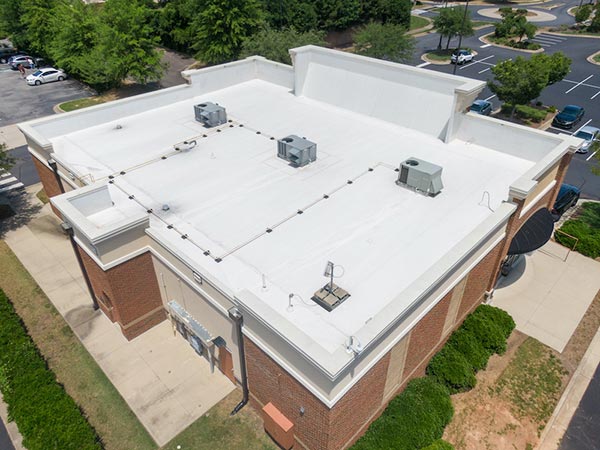
Businesses in Stevens Point depend on durable roofing systems that can withstand heavy snowfall, spring rain, warm summers, and year-round temperature changes. Choosing the right roof during a new construction project or replacement will affect maintenance needs, energy performance, and long-term operating costs. Flat roof installation gives commercial property owners several proven roofing systems to choose from, each designed to meet different building requirements.
For related commercial roofing guidance in Stevens Point, see EPDM roofing in Stevens Point and Standing seam metal roof in Stevens Point.
Call Golden Eagle Roofing at (608) 633-6719 for flat roof installation in Stevens Point, WI.
Flat Roof Installation Options
Commercial flat roofs are commonly installed using TPO, EPDM, PVC, or spray polyurethane foam. Each system offers different advantages depending on the building’s purpose, roof layout, drainage conditions, and long-term maintenance goals. Understanding these differences will help property managers select a roofing system that supports both performance and budget expectations.
Comparing TPO and EPDM Flat Roof Installation

TPO roofing is a single-ply membrane known for its reflective surface and heat-welded seams. The welded seams create strong connections that help resist water infiltration, while the reflective membrane can help reduce rooftop heat during Wisconsin’s warmer months. TPO is commonly selected for office buildings, retail properties, and warehouses seeking an energy-efficient roofing solution.
One consideration with TPO is that installation quality has a direct effect on long-term performance. Proper seam welding, flashing installation, and drainage design all contribute to how well the roof performs over time.
EPDM roofing is another single-ply membrane made from synthetic rubber. It has been used on commercial buildings for decades because of its flexibility and dependable weather resistance. EPDM performs particularly well through Wisconsin’s cold winters, where repeated freeze-thaw cycles place stress on roofing materials.
Unlike TPO, EPDM seams are typically joined using specialized adhesives or seam tape rather than heat welding. When properly installed and maintained, EPDM provides reliable waterproofing and remains a practical choice for many commercial buildings.
Comparing PVC and Spray Polyurethane Foam
PVC roofing is another single-ply membrane that uses heat-welded seams like TPO. It is well suited for commercial buildings where exposure to chemicals, grease, or industrial contaminants is a concern, making it a common choice for restaurants, manufacturing facilities, and food-processing buildings. PVC also provides dependable waterproofing and performs well when installed with proper flashing and drainage.
Property owners should consider the building’s specific operating environment before selecting PVC. While it offers excellent durability and chemical resistance, those advantages may not be necessary for every commercial property.
Spray polyurethane foam (SPF) is applied as a liquid that expands into a seamless layer across the roof surface. After curing, it receives a protective coating that shields it from sunlight and weather. Because there are no field seams, SPF minimizes many common leak points while adding insulation that can improve energy efficiency throughout the year.
SPF performs best on roofs that can be regularly maintained and recoated as the protective surface ages. Periodic inspections and timely recoating help preserve the insulation benefits that make this system attractive for many commercial buildings.
Choosing the Right Flat Roof Installation
No single roofing system is the best choice for every commercial property. TPO offers reflective performance and welded seams, EPDM provides excellent flexibility in chilly weather, PVC excels in demanding environments, and SPF combines seamless waterproofing with additional insulation value.
The right decision depends on several factors, including the building’s use, roof design, drainage conditions, maintenance expectations, energy goals, and long-term budget.
For flat roof installation in Stevens Point, WI contact Golden Eagle Roofing at (608) 633-6719 today.
FAQ
What is the most durable flat roof system for a commercial building in central Wisconsin?
Durability depends on how well the roofing system matches the building’s needs and how it is maintained. TPO, EPDM, PVC, and spray polyurethane foam all provide long service lives when professionally installed and maintained. Wisconsin’s snow, rain, and freeze-thaw cycles make quality installation and regular inspections just as important as the roofing material itself.
How does spray foam compare to membrane systems like TPO or EPDM for flat roof installation?
Spray polyurethane foam creates a seamless roofing surface while adding insulation that can improve energy efficiency. TPO and EPDM are single-ply membrane systems with different seam construction methods and performance characteristics.
What factors most affect how long a new flat roof installation lasts on a commercial building?
Installation quality, drainage, weather exposure, maintenance, rooftop traffic, and prompt repairs all influence roof lifespan. Regular inspections and addressing minor issues early help every roofing system reach its expected service life.