In Baraboo, snow can sit on a flat roof for weeks. When it melts, water has to travel across the roof to the drains. If a seam is weak or a pipe boot is loose, that water can find the gap. That’s why, when comparing EPDM roofing in Baraboo, WI, it pays to ask how the rubber will be installed.
Golden Eagle Roofing provides commercial single-ply roofing, including EPDM. We also offer EPDM roofing in Stevens Point, WI. Questions? Call 608-633-6719.
This guide covers the five parts that decide how well your roof works: the membrane, the seams, how it is held down, the pipes and vents, and the drainage.
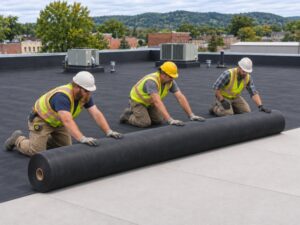
Choosing the EPDM Membrane
A 60-mil black EPDM membrane is a common starting point for a low-slope roof. A thicker sheet can offer more puncture resistance, which matters when a tool drops or crews regularly cross the roof to service equipment. Thickness is one part of the decision; walkway pads can also protect busy routes.
- 90 mil: A thicker option to consider where puncture resistance is a priority, such as on roofs with frequent equipment service.
- Reinforced sheet: Some mechanically attached systems specify a membrane with a fabric layer to resist tearing around fasteners and plates.
- Black or white: Black EPDM is common. White EPDM reflects more sunlight and can help keep the roof surface cooler in summer. Compare cost and availability for the system you’re considering.
| Thickness | Typical Use | Trade-off |
|---|---|---|
| 45 mil | Low-traffic roofs where the system allows it | Lower material cost, less puncture resistance than thicker options of the same type |
| 60 mil | Many low-slope commercial roofs | A balance of durability and cost |
| 90 mil | Roofs where added puncture resistance is a priority | Thicker membrane, typically higher material cost |
Check the manufacturer’s system and warranty requirements before choosing. Some warranties require a particular thickness or membrane type.
Seams: Where Most Flat Roof Leaks Start
A roof made of big sheets still has joints, called seams. EPDM seams are commonly joined with seam tape. The tape width, overlap, and primer steps depend on the manufacturer’s instructions. A typical taped seam goes together like this:
- Overlap the sheets: Leave the overlap required for the specified seam tape.
- Clean the rubber: Remove dirt, dust, and other residue from the bonding surfaces.
- Apply primer: Prime the surfaces as directed and let the primer dry to the condition specified by the manufacturer.
- Set the tape: Lay the tape straight and bring the sheets together without wrinkles or gaps.
- Roll the seam: Use the specified roller and check the finished edge for gaps or lifting.
Cold weather matters. Follow the primer and tape requirements for temperature and surface conditions. The rubber should be dry and free of frost or dew before the seam is made.
A T-joint is where three sheets meet. The change in thickness can leave a small gap, so the installer should use the manufacturer’s approved cover or flashing detail where required. Before closeout, check finished seam edges for wrinkles, gaps, and lifting.
How the Roof Is Held Down
EPDM has to stay in place in strong wind. There are three main ways to attach it:
| Method | How It Holds | Best Fit | Limits |
|---|---|---|---|
| Fully adhered | Bonded to an approved substrate | Roofs with a compatible substrate, including layouts with many corners and openings | Adhesive adds cost and has application limits |
| Mechanically attached | Fasteners and plates secure the system to the deck | Roofs with a deck that can hold the specified fasteners | Membrane type and fastener layout depend on the approved assembly |
| Ballasted | Stone or pavers weigh down the loose-laid membrane | Structures and sites suited to a ballasted design | Adds weight that the structure must be able to carry |
How to choose an attachment method:
- Wind uplift: Wind can pull hardest at corners and edges. Use an approved assembly and attachment layout that meet the roof’s design requirements.
- Deck type: Steel, wood, and concrete can require different fasteners or substrates. Match the attachment to the existing deck.
- Height and exposure: Building height and open surroundings affect wind loads and can limit which assemblies are suitable.
- Structure: Use ballast only when the structure can safely carry the added weight and the design allows it.
Deck condition and wind exposure matter on other Wisconsin projects, too. Read our guide to EPDM roofing in Onalaska, WI for more on how local weather affects these roofs.
Pipes, Vents, and Roof Edges
 Anything that passes through the roof is a penetration. This includes plumbing vents, exhaust fans, AC units, and skylights. Each one needs a flashing detail suited to its shape and location.
- Round pipes: A compatible pre-molded rubber boot can seal around a standard round pipe. Secure and seal the top as specified.
- Curbs: Flashing runs up the sides of skylight and equipment curbs and terminates with an approved detail.
- Walls: The flashing runs up the wall and is secured at the top with the specified termination detail.
- Roof edges: Edge metal and membrane attachment work together to secure the perimeter.
Boots, molded flashing, and field-formed flashing cover many penetrations. A pitch pocket—a small enclosure filled with sealant—may be suitable for an odd shape when the manufacturer allows it.
Ask the roofer to list the penetrations in the proposal and explain how each will be flashed. The layout should also leave a clear path for water to move around curbs.
Drainage: Getting Water Off the Roof
A low-slope roof needs enough pitch to move water to the drains. A design slope of about 1/4 inch per foot is a common starting point; the right design depends on the building, applicable code, and the selected roof system. Water that remains about 48 hours after rain in normal drying conditions is a warning sign of poor drainage.
Good drainage may include:
- Tapered insulation to create slope.
- Crickets, or small raised areas that steer water around units and walls.
- Compatible roof drains, with clamping rings where specified and strainers to keep leaves out.
- Overflow drains or scuppers where required so water has a backup route.
In Baraboo, melting snow can refreeze around drains and scuppers. Clear outlets and a slope that directs meltwater toward them help keep water from backing up.
What EPDM Does vs. What the Install Does
EPDM has strengths of its own, but the membrane can’t make up for an open seam or a drain that sits too high. Here’s what comes from the material and what depends on the roof design and installation.
| What EPDM Does as a Material | What Depends on the Installation |
|---|---|
| Stays flexible in cold weather | How well seams bond and hold over time |
| Resists UV and ozone exposure | How securely the roof is attached to resist wind |
| Comes in large sheets that can reduce the number of seams | How well pipes, curbs, and walls are flashed |
| Can flex as temperatures change | Whether the slope, drains, and overflows move water off the roof |
A 20-year warranty does not mean the roof will last exactly 20 years. Service life depends on how the roof was built, what it is exposed to, and how it is cared for. Regular checkups can help catch small problems early. Learn more about Golden Eagle Roofing’s commercial roof maintenance program.
Questions to ask every roofer:
- Membrane: What thickness and color do you recommend, and why?
- Seams: What tape width and overlap does the system require, and how will you check the seams?
- Attachment: Which method fits my deck and wind exposure?
- Penetrations: Which pipes, vents, and curbs are in the scope, and how will you flash them?
- Drainage: Where will water drain, and is overflow drainage needed?
Get Your EPDM Roof Done Right in Baraboo
When comparing estimates, ask for these details in writing:
- What the roofer found about the roof deck
- The proposed membrane and sheet layout
- The attachment method and why it fits the building
- Which penetrations are included and how they will be flashed
- The proposed drainage plan
- The warranty options and requirements for the proposed system
Request a free estimate from Golden Eagle Roofing or call 608-633-6719 to discuss EPDM roofing for your Baraboo building.
FAQs About EPDM Roofing in Baraboo, WI
How long does an EPDM roof last in Baraboo?
EPDM roofs can last for decades, but there is no fixed lifespan for every building. Seam quality, flashing, drainage, exposure, and regular maintenance all affect how long the roof stays in service.
Is EPDM a good choice for Wisconsin winters?
Yes. EPDM stays flexible in cold weather and can handle seasonal temperature changes. The roof still needs sound seams, tight flashing, and clear drains so snowmelt can leave the roof.
What thickness of EPDM should I choose?
A 60-mil membrane is a common starting point. A 90-mil option may make sense where added puncture resistance is a priority. The right choice depends on how the roof is used, the assembly design, and the manufacturer’s requirements.
Can EPDM be installed over my old roof?
Sometimes. A roof recover may be possible if the existing assembly is dry and sound, the deck can support it, and local code and the manufacturer allow it. Wet insulation and damaged decking need to be addressed first.
How do I know if my EPDM seams are failing?
Look for lifted edges, wrinkles near seams, or tape pulling away. Water stains inside can also signal a leak, though they don’t tell you where it started. Have a roofer check suspect seams before water spreads beneath the membrane.
How much does EPDM roofing cost in Baraboo, WI?
Cost depends on roof size, membrane thickness, attachment method, and deck condition. The number of pipes, vents, and drains can also affect the price. Contact Golden Eagle Roofing to request a free estimate for your building.