EPDM roof repair can address open seams, punctures, shrinkage, failed flashing, and some blisters. The right fix depends on what caused the damage and whether the surrounding rubber is still sound. Golden Eagle Roofing provides commercial roof repairs and offers EPDM roofing in Stevens Point, WI. To discuss a repair visit, call 608-633-6719.
This guide explains what can be repaired, how common repairs are made, and what to check before the job is complete.
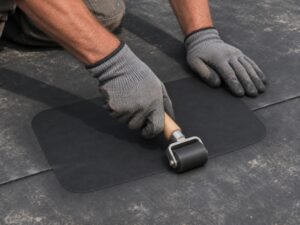
What Is an EPDM Roof?
EPDM is a synthetic rubber sheet used on flat and low-slope roofs. It stays flexible in cold weather, but its seams, flashing, and surface can still wear with age, weather, and foot traffic.
Common Defects an EPDM Roof Repair Fixes in Stevens Point, WI
Each defect leaves clues. Finding the cause helps a roofer decide whether a patch, a new seam, or a larger repair is needed.
Open or Loose Seams
Look for a lifted edge, a dark dirt line along the splice, or a visible gap. Seams can fail as materials age or move, or because the original surfaces were poorly prepared. A patch placed over a dirty or failing splice may not hold.
Punctures, Cuts, and Abrasion
Damage often shows up near walkways, rooftop equipment, or places where debris collects. Dropped tools, hail, and foot traffic can all damage the membrane. A small puncture in sound rubber may take a patch. A broad area of wear may need a larger repair.
Shrinkage
Aging rubber can pull tight at walls, corners, and pipes. A surface patch alone won’t relieve that tension. The repair may require releasing tension, replacing flashing, or improving securement, depending on the system.
Flashing Failures
Look for cracks, lifted laps, or gaps around pipe boots, curbs, and wall terminations. A small gap at a sound detail may be repairable. Failed flashing or securement may need replacement.
Blisters
A roofer can assess whether a blister is growing, damaged, or associated with trapped moisture. A small, stable blister may be monitored. A blister with confirmed moisture or failing materials may need to be opened and repaired, with wet materials removed as needed.
| Defect | Sign | Likely Cause | Possible Repair |
|---|---|---|---|
| Open seam | Lifted edge, dirt line, or gap | Age, movement, or poor original preparation | Prepare the sound rubber and re-splice or install a compatible cover strip |
| Puncture or cut | Hole, cut, or worn spot | Tools, hail, or foot traffic | Install a compatible EPDM patch over prepared, sound membrane |
| Shrinkage | Rubber pulled tight at walls or pipes | Membrane aging and tension at fixed points | Relieve tension and repair flashing or securement as needed |
| Flashing failure | Cracks, open laps, or gaps at terminations | Movement, age, or failed sealant | Repair the failed detail or replace the flashing |
| Blister | Raised bubble | Trapped air or moisture | Assess first; monitor if stable or repair if conditions warrant it |

EPDM Roof Repair Methods and Materials
Match the repair method and materials to the existing EPDM system. Products that the manufacturer hasn’t approved may affect warranty coverage. Share any warranty paperwork before work begins.
The Repair Sequence
- Find the source: Water can travel beneath the membrane before it appears indoors. Trace the leak before choosing a repair.
- Clean the area: Remove dirt and residue using the method and cleaner specified for the membrane.
- Prime where required: Apply compatible primer and allow it to dry as directed.
- Apply the repair: Use the specified seam tape, patch, or flashing. A patch should extend onto sound membrane by the required amount, with rounded corners where specified.
- Roll and finish: Press the material down with the specified roller. Use compatible lap sealant on edges where the detail requires it.
Conditions Needed for a Good Bond
Tape and adhesive need a clean, dry surface free of oil, frost, and standing water. Air and roof temperatures must meet the product’s limits. If conditions prevent a permanent repair, ask whether a temporary measure is suitable until the roof can be repaired properly.
When an Old Seam Is Contaminated
If old tape or adhesive has failed, the roofer may need to cut back to sound material and rebuild the splice. A cover strip may be an option when there is enough clean, sound membrane for it to bond.
Products to Avoid on EPDM
Avoid generic roof tar, asphalt patching products, and sealants that aren’t approved for the EPDM system. An incompatible product may not bond and can make a later repair harder.
| Method | Used For | Requirements | Limits |
|---|---|---|---|
| Seam tape re-splice | Open or failed seams | Clean, dry surfaces and compatible primer and tape | Needs sound rubber at both sides of the splice |
| Cover strip | Suitable seam runs | Approved strip applied and rolled onto prepared membrane | Does not relieve membrane shrinkage |
| EPDM patch | Localized punctures and cuts | Specified overlap onto sound material | May not suit widespread wear or brittle rubber |
| Formable flashing | Pipes, corners, or irregular shapes | Compatible material formed to the approved detail | Failed securement needs its own repair |
| Lap sealant | Edges where the system calls for it | Compatible sealant and a properly prepared edge | Cannot replace a failed splice or flashing |
Drainage and Flashing Checks
Drainage
Water still standing about 48 hours after rain in normal drying conditions is a warning sign. Record where it collects and how large the area is. A drainage check can include:
- Blocked strainers, drains, or scuppers
- Dirt rings or stains where water has collected
- Visible damage or gaps around drain details
- Whether the drains line up with the roof’s low points
Ice can block drains and scuppers in winter. Clearing a blockage helps water leave the roof, but an active leak still needs to be traced to its source. If water keeps collecting after the outlets are clear, the roof may need a closer look at slope, settled insulation, or drain placement.
If the same problems keep coming back, a commercial roof inspection in Stevens Point, WI can help put the repair in context. See our Stevens Point commercial roofing guide for related guidance.
Flashing
Check pipe boots, curbs, wall terminations, edge metal, and scuppers for lifted edges, cracked sealant, open laps, or missing fasteners. A small gap may be resealed if the underlying detail is sound. If the rubber or attachment has failed, the flashing may need to be rebuilt or replaced.
How Completed EPDM Repairs Are Checked
The right checks depend on what was repaired. Use this checklist to discuss how the roofer will verify the work and what records you’ll receive.
| Check | What to Confirm |
|---|---|
| Seams and patch edges | Edges are checked by the method appropriate to the EPDM system, with no visible gaps or lifting. |
| Visual check | No lifted corners or open wrinkles. Sealant is present where specified. |
| Water test, if appropriate | Agree on the test area, conditions, and how the interior will be monitored. |
| Drainage | Nearby drains and scuppers are clear if drainage was part of the repair scope. |
| Photos | Ask for a wide shot to locate the repair and close-ups that show the condition before and after work. |
| Written record | Record the date, location, materials, remaining concerns, and any recommended follow-up. |
Agree on when to recheck the repair and report any new stains or drips after rain. A simple record might read: “North HVAC curb — open flashing lap repaired with compatible EPDM flashing; check after the next heavy rain.”
Schedule EPDM Roof Repair in Stevens Point, WI
Call Golden Eagle Roofing at 608-633-6719 or contact us online to discuss your Stevens Point roof. Describe where and when you noticed the leak, and ask which checks, repairs, and follow-up records the proposed visit will cover.
Frequently Asked Questions
How do I know my EPDM roof needs repair?
Ceiling stains, damp insulation, or musty smells may point to a leak. A roofer can look for lifted seams, cuts, blisters, cracked flashing, or recurring standing water.
Can EPDM roofs be repaired in winter?
Yes, when the surface can be made clean, dry, and frost-free and the air and roof temperatures meet the repair product’s limits. If conditions aren’t suitable, ask whether a temporary measure is possible until a permanent repair can be made.
Will a repair affect my roof warranty?
It can. Incompatible materials or unapproved methods may affect coverage. Share your warranty details before work starts so the repair can be planned around the applicable requirements.
Can I patch my EPDM roof myself?
Generic tar and sealants may not bond to EPDM and can complicate later repairs. A lasting patch needs sound membrane, proper surface preparation, and compatible materials. Have a roofer assess the damage, especially if the roof is under warranty.
How do you find a leak on a flat roof?
The spot where water drips inside may be some distance from where it entered. A roofer compares the interior signs with conditions at seams, flashing, penetrations, and drains. Targeted water testing or a moisture survey may help if the source remains unclear.
How much does EPDM roof repair cost in Stevens Point?
Cost depends on the type and size of the damage, materials, and roof access. Concealed moisture or damage can change the scope. Ask for a written estimate that explains what is included and how additional work would be priced.