
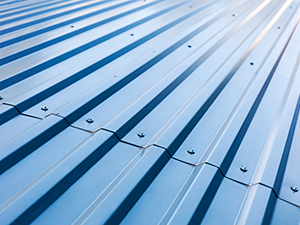
Commercial buildings in Wisconsin face constant stress from harsh winters, heavy snow, freeze-thaw cycles, and summer heat swings. These conditions demand a standing seam roof that can perform reliably without constant maintenance. Many property owners are turning to a standing seam roof for its long-term durability, weather resistance, and consistent performance.
Golden Eagle Roofing installs standing seam roof systems for commercial properties in Tomah, WI using American-made materials and industry-backed warranties. Call 608-633-6719 to discuss your building and plan a roofing system built to handle Wisconsin conditions.
Standing Seam Roof Upgrade
So what is driving the switch? This article breaks down the performance advantages that make standing seam the roofing system Wisconsin commercial building owners keep coming back to.
Most commercial roofing systems were not designed with Wisconsin winters in mind. Exposed fastener metal panels develop leaks as fastener gaskets degrade under freeze-thaw stress. Single-ply membranes are vulnerable to puncture, UV breakdown, and seam failure. Built-up systems trap moisture and add significant weight to a roof deck already carrying a heavy snow load.
Each of these systems has a ceiling on its performance. Standing seam does not have the same limitations. It was engineered specifically to address the failure points that plague other commercial roofing methods.
No Exposed Fasteners Means No Fastener Failures
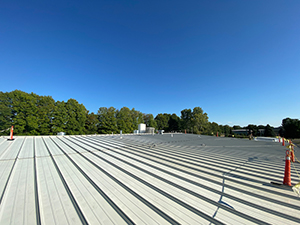
This is the detail that separates standing seam from every other metal roofing option. Panels are secured with concealed clips that attach to the structural deck beneath the panel surface. No fastener ever penetrates the weathering surface of the roof. On a commercial building with thousands of square feet of roof area, that means thousands of potential leak points are simply eliminated from the equation. Compare that to an exposed fastener system where every single screw is a gasket waiting to fail, and the performance advantage becomes obvious. In a Wisconsin climate where metal contracts and expands dramatically between seasons, removing fastener penetration from the roof surface is not just a nice feature. It is a fundamental engineering improvement.
Standing Seam Roofing Moves with the Building
Metal expands in heat and contracts in cold. On a large commercial roof, that movement is significant across the full length of each panel. Standing seam systems are designed for exactly this.
Floating clip systems allow each panel to move independently along its length without transferring stress to the fastener or the seam. This thermal accommodation is what allows standing seam roofs on commercial buildings to maintain their watertight integrity across decades of Wisconsin temperature swings without the cracking, oil canning, and seam fatigue that fixed-fastener systems develop over time.
Wisconsin Building Benefits
Property owners and facility managers who upgrade to standing seam report a consistent set of improvements across their buildings:
- Fewer leak events and emergency repair callouts during and after winter storms
- Significantly reduced annual maintenance requirements compared to single-ply or exposed fastener systems
- Better snow shedding performance on commercial roof pitches above the minimum slope threshold
- A roof assembly that integrates cleanly with insulation systems for improved building energy performance
- Long-term paint and finish protection backed by Sherwin Williams 40-year paint warranty on American-made panels
Standing Seam Roof’s Longevity
Most commercial roofing systems require replacement within 20 to 30 years under normal conditions. A properly installed standing seam system on a commercial building outlasts that window considerably.
For a Wisconsin commercial property owner thinking long-term, fewer roof replacement cycles mean less disruption, lower costs, and more consistent performance over time. A roofing system that holds up year after year supports operations without the repeated downtime that comes with frequent repairs or full replacements.
That level of longevity is not by chance. It comes from minimizing common failure points such as exposed fasteners, vulnerable seams, and materials that break down under UV exposure and thermal stress. When those weaknesses are addressed in the design and installation, the roof is built to perform reliably well into the future.
Standing Seam Roof Experts
Commercial building owners who are tired of constant repairs and underperforming systems are turning to standing seam roof solutions for a reason. A standing seam roof offers long-term durability, strong weather resistance, and dependable performance in demanding climates. This makes it a practical choice for reducing maintenance and improving overall roof reliability.
Golden Eagle Roofing installs standing seam roof systems for commercial properties in Tomah, WI using American-made materials built for long-term performance. Call 608-633-6719 to assess your building and plan a more reliable roofing solution.
FAQ
What panel widths are typically available for commercial standing seam installations?
Commercial standing seam panels are commonly available in 12, 16, and 18-inch widths, with wider panels generally used on larger commercial footprints to reduce seam count.
Is standing seam roofing suitable for low-slope commercial roofs?
Structural standing seam panels can be installed on slopes as low as a quarter inch per foot, making them viable for many commercial low-slope applications.
Can solar panels be mounted on a commercial standing seam roof?
Yes, standing seam roofs are actually ideal for solar installation because clamp-based mounting systems attach directly to the raised seams without any roof penetrations required.
What metal types are used in commercial standing seam roofing?
Galvanized steel and Galvalume steel are the most common commercial options, with aluminum used where corrosion resistance is a priority.