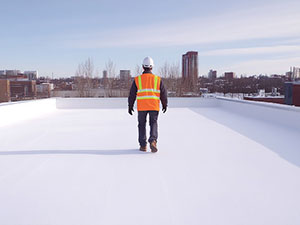
Investing in a commercial roof can be a major decision for any business owner or facility manager. Silicone roof coating is becoming increasingly popular for commercial buildings in Sparta, Wisconsin, and across the region due to their durability, waterproofing, and energy efficiency. At Golden Eagle Roofing, we specialize in commercial roof solutions, helping businesses maximize the lifespan of their roofs while minimizing long-term maintenance costs. If you are considering silicone roof coatings, call Golden Eagle Roofing at 608-633-6719 for a professional assessment.
Silicone Roof Coating Cost vs Value
Understanding the true value of silicone roof coatings goes beyond the initial price. Many businesses hesitate at the upfront cost, but a closer look at benefits, maintenance savings, and energy efficiency demonstrates why silicone coatings are a smart investment for commercial properties.
Initial Investment
For large commercial roofs, replacing the roof entirely can cost tens of thousands of dollars. A silicone coating, applied over an existing roof, can extend the roof’s life by 10 to 15 years, providing comparable protection for a fraction of the replacement cost. Facility managers often find that this cost-effectiveness is especially valuable for industrial buildings, warehouses, and office complexes where downtime or disruption can be costly.
Longevity Benefits
One of the key advantages of silicone roof coatings is their ability to withstand weather extremes. Silicone is highly resistant to UV rays, ponding water, and temperature fluctuations. For commercial buildings in Sparta, where snow, rain, and seasonal temperature swings are common, this durability prevents leaks, membrane deterioration, and costly water damage.
Additional benefits include:
- Seamless protection over the existing roof, reducing weak points where leaks typically occur
- Resistance to mold and mildew in humid or wet conditions
- Long-term stability, even on flat or low-slope roofs that are prone to ponding water

These properties reduce the frequency of maintenance and emergency repairs, which directly translates into long-term savings.
Maintenance and Repair Savings
Traditional commercial roofing systems often require ongoing maintenance to address leaks, cracks, and water intrusion. Silicone coatings dramatically reduce these issues because they form a continuous, protective barrier.
Businesses benefit from:
- Fewer repair calls and associated labor costs
- Reduced disruption of business operations during maintenance
- Less frequent roof inspections and patching
Even minor roof damage that occurs on silicone-coated surfaces is often easy to repair with simple top-ups or touch-ups, avoiding the need for full-scale interventions.
Energy Efficiency
Silicone roof coatings are highly reflective, which helps reduce heat absorption and lowers cooling costs. For commercial properties with large roof surfaces, energy savings can be significant over time.
By reflecting sunlight and UV rays:
- Air conditioning load decreases, reducing utility bills
- Building interiors stay cooler, improving comfort for employees and customers
- Reduced wear on HVAC systems, extending equipment lifespan
These energy efficiency benefits contribute to the long-term value of the coating and can offset a portion of the initial investment.
Comparing Cost vs Replacement Value
When evaluating cost vs value, it is useful to compare silicone coating to a complete roof replacement:
- Roof replacement: High upfront cost, significant downtime, disruption to operations, and shorter intervals before additional maintenance is required
- Silicone coating: Lower upfront cost, minimal disruption, protection for 10–15 years, and reduced maintenance needs
For many businesses, silicone coatings provide a practical balance of cost savings, durability, and extended roof life without the operational challenges associated with a full replacement.
Silicone Roof Coating Specialists
While silicone roof coatings offer excellent value, professional application is critical for ensuring performance. Proper roof preparation, cleaning, and application technique are essential to prevent bubbles, poor adhesion, or early failure. At Golden Eagle Roofing, our trained team ensures every commercial roof is properly assessed and coated for maximum lifespan and protection.
For commercial property owners and managers in Sparta, Wisconsin, 608-633-6719 to schedule an evaluation and discover how silicone roof coatings can save money while extending your roof’s life.
FAQ
Can silicone coatings extend the life of an old roof?
Yes, coatings can add 10–15 years of protection to many existing roofs.
Are silicone coatings energy-efficient?
Yes, their reflective properties reduce heat absorption and cooling costs.
Do silicone-coated roofs require frequent maintenance?
No, maintenance needs are minimal compared to traditional roofing, with simple touch-ups usually sufficient.