
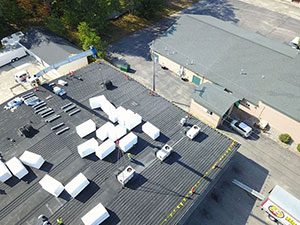
PVC roofing is widely used on commercial buildings because of its ability to withstand demanding weather conditions while performing well across many building types. At Golden Eagle Roofing, we work with property owners throughout Sparta, Wisconsin, to help them understand how PVC roof responds to environmental stress and where it is most commonly applied.
If you have questions about PVC roof performance or suitability, you can contact us at 608-633-6719. Learning how PVC roofing handles weather exposure and building demands helps owners make informed, long term roofing decisions.
How PVC Roofing Performs in Harsh Weather and Best Uses
Commercial roofs face constant exposure to sun, wind, moisture, and temperature changes. Roofing materials must remain flexible, watertight, and durable despite these challenges. PVC roofing is engineered to address these conditions through material composition and installation methods that support consistent performance.
PVC Roofing and Extreme Temperature Swings
One of the key advantages of PVC roof is its ability to perform through wide temperature fluctuations. In climates like Wisconsin, roofs experience freezing winters and warm summers, which cause materials to expand and contract repeatedly. Over time, this movement can weaken seams and surfaces.
PVC roof membranes are designed to remain flexible in both hot and cold conditions. This flexibility helps reduce cracking, splitting, and seam stress caused by thermal movement. As temperatures rise and fall, PVC roof adapts without losing its structural integrity, which supports long term durability.
Weather Resistance Built into PVC Roofing Systems
PVC roofing is highly resistant to environmental exposure. The membrane surface resists UV radiation, which helps prevent material breakdown from prolonged sun exposure. This UV resistance slows aging and helps maintain surface strength over time.
Moisture resistance is another important performance factor. PVC roof forms a continuous waterproof barrier when properly installed, reducing the risk of water intrusion during heavy rain or snowmelt. Its welded seams create strong bonds that prevent moisture from entering the roofing system even during severe weather events.
Wind Performance and Seam Strength
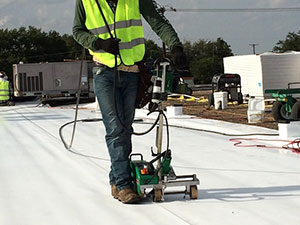
High winds place significant stress on commercial roofing systems. Uplift pressure can loosen membranes or expose weak points if seams are not secure. PVC roofing systems rely on heat welded seams that bond membrane layers together at a molecular level.
These welded seams provide exceptional strength and consistency across the roof surface. This seam integrity helps PVC roof remain secure during strong winds and storms. By maintaining a tight, unified surface, the roof helps protect the building envelope from wind driven rain and debris.
Where PVC Roofing Is Commonly Used
PVC roofing is commonly installed on low slope commercial buildings. These roof designs benefit from a membrane system that provides waterproof protection while accommodating rooftop equipment and foot traffic.
Buildings such as warehouses, manufacturing facilities, offices, and retail spaces frequently use PVC roof because of its durability and adaptability. The membrane performs well around penetrations, drains, and edges, making it suitable for complex roof layouts.
PVC Roofing for Buildings with Environmental Exposure
Some commercial buildings face additional exposure risks such as grease, chemicals, or exhaust emissions. PVC roofing resists many substances that can degrade other roofing materials over time. This makes it a practical option for restaurants, food processing facilities, and industrial environments.
By resisting chemical exposure and surface staining, PVC roof helps maintain performance and appearance in challenging settings. This resistance reduces maintenance demands and supports longer service life.
Adaptability Across Roof Design Needs
PVC roofing systems can be installed using different attachment methods depending on building requirements. Fully adhered, mechanically attached, or induction welded systems allow flexibility in design and performance planning.
This adaptability allows PVC roof to meet the structural and environmental needs of various commercial buildings. The ability to customize installation methods helps ensure proper performance based on wind zones, building use, and roof configuration.
Long Term Performance in Demanding Conditions
The combination of weather resistance, seam strength, and material flexibility makes PVC roofing a reliable option for long term commercial use. When exposed to harsh conditions, consistent performance helps reduce the likelihood of leaks, surface damage, and premature replacement.
Understanding where PVC roof works best and how it handles weather exposure allows building owners to plan with confidence. The material’s performance characteristics support durability across a wide range of commercial applications.
Specializing in PVC Roofing
PVC roofing continues to be a dependable solution for buildings that face demanding weather and operational conditions. If you would like more information about PVC roof systems or their performance in harsh weather, contact Golden Eagle Roofing at 608-633-6719. PVC roofing offers reliable protection and adaptability for commercial buildings throughout Sparta, Wisconsin.
FAQ
How does PVC roofing handle extreme temperatures?
It remains flexible in hot and cold conditions, reducing cracking and seam stress.
Is PVC roof suitable for high wind areas?
Yes, welded seams provide strong resistance against wind uplift.
Where is PVC roofing most commonly used?
It is often installed on low slope commercial buildings.
Does PVC roof resist moisture intrusion?
PVC roof forms a continuous waterproof barrier that helps prevent leaks.